
TRW & Co · Real Estate, Construction & Energy
Real Estate Development in the UAE
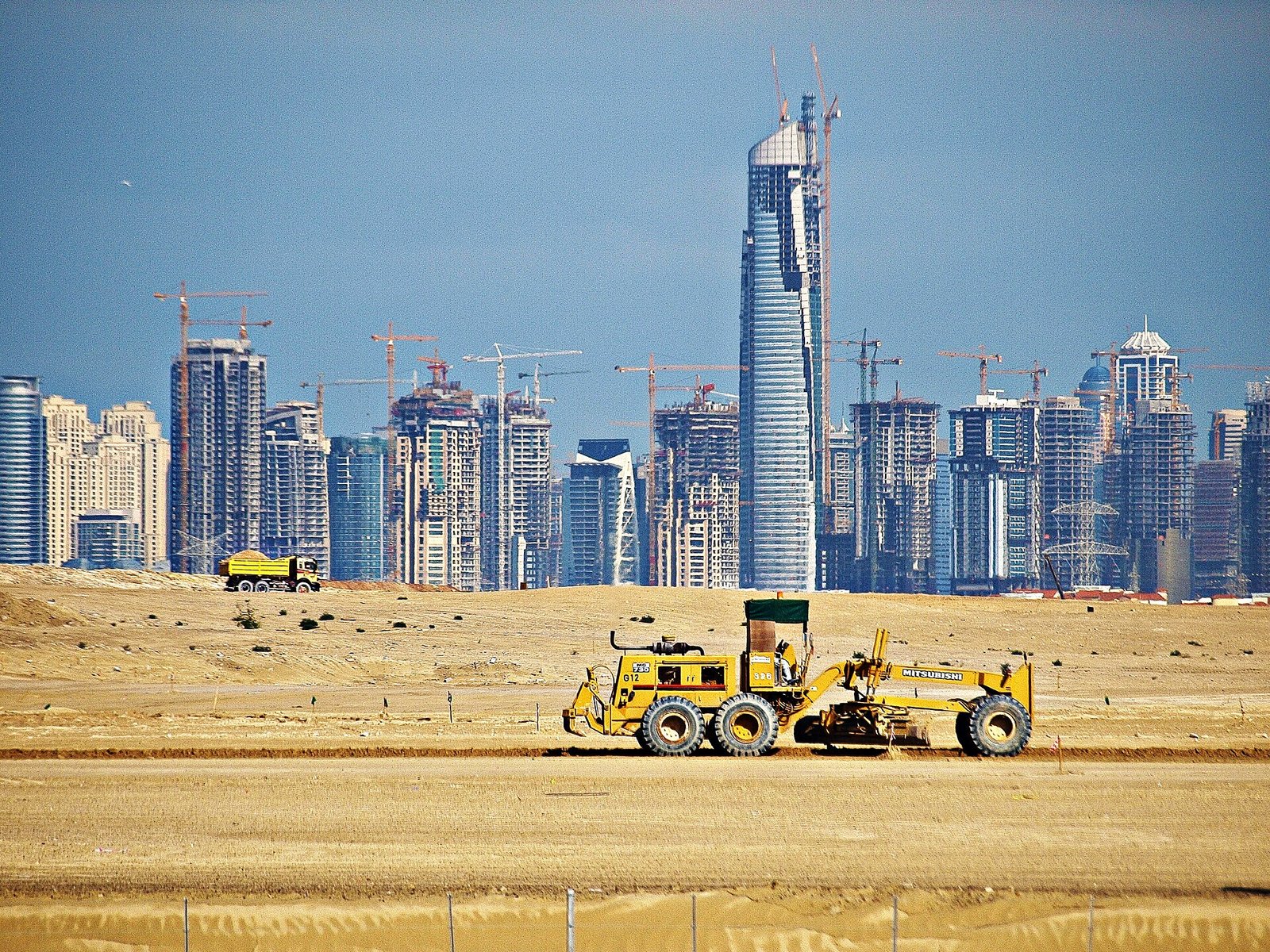
Real estate development in the UAE runs through emirate-level regimes for developer registration, escrow, off-plan sales and permits, overlaid by federal contract and tax law. Abu Dhabi amended its real estate law in 2025, and a new Civil Transactions Law took effect in June 2026. This guide explains how developers, landowners and investors should structure and run projects now.
Key pointAbu Dhabi now lets established developers draw on escrow before 20% completion, but only against a bank guarantee covering at least 20% of construction cost and with a clean track record. The restriction moves to the bank rather than disappearing.
At a glance
Escrow is mandatory
Dubai Law No. 8 of 2007 and Abu Dhabi's real estate law require a dedicated escrow account for each off-plan project before buyers' money is taken.
Abu Dhabi 2025 reforms
Law No. 2 of 2025 amended the 2015 law from August 2025, requiring prior project registration and barring land or brokerage payments from escrow.
Cancellation deduction bands
A 2025 Abu Dhabi decision caps developer deductions on buyer default from nil before construction to 40% at 60% to 100% completion.
Dubai buyer default
Dubai developers must notify the DLD and give a 30-day notice to remedy; retention depends on construction progress, not unit completion.
New Civil Code
Since 1 June 2026 the federal Civil Transactions Law imposes mandatory pre-contract disclosure duties that apply to sale and development agreements.
Swipe or scroll →
What real estate development in the UAE covers
Real estate development in the UAE is the process of acquiring land or development rights, structuring the project vehicle, obtaining planning and building approvals, registering the project with the emirate's real estate regulator, selling units off-plan through an escrow account, building, and handing over title to buyers and the owners' association. Each emirate runs its own land and development regime, while federal law supplies the civil, corporate and tax overlay.
The legal work matters at every stage because off-plan sales are tightly regulated. In Dubai and Abu Dhabi a developer cannot lawfully take buyers' money until the developer and project are registered and an escrow account is open, and draw-downs from that account follow construction progress certified by approved consultants. Errors here are not technicalities: they can freeze funding, invalidate sales and expose directors to penalties.
The regulatory environment has also moved quickly. Abu Dhabi amended its 2015 real estate law in 2025 and issued detailed decisions on escrow withdrawals and buyer cancellations, and a new federal Civil Transactions Law took effect on 1 June 2026, changing pre-contract disclosure, hardship and liability rules that touch every development and sale agreement.

The legal and regulatory framework
Dubai
The Dubai Land Department and its regulatory arm, the Real Estate Regulatory Agency (RERA), supervise development. Law No. 7 of 2006 on Real Property Registration provides for freehold ownership by non-UAE nationals in designated areas. Law No. 8 of 2007 requires a dedicated escrow account for each off-plan project, operated by an approved bank and protected from the developer's creditors. Law No. 13 of 2008, as amended, created the Interim Real Property Register in which off-plan sales are recorded, and it governs what a developer may retain if a buyer defaults. Law No. 6 of 2019 regulates jointly owned property, owners' associations and service charges.
Planning and building permits come from Dubai Municipality or, inside its zones, from bodies such as the Dubai Development Authority, often subject to master developer approval. Marketing an off-plan project requires a regulatory advertising permit, and sales agreements must be registered with the DLD.
Abu Dhabi
Abu Dhabi Law No. 3 of 2015 regulates the real estate sector, including developer licensing, a Real Estate Development Register, an Interim Real Estate Register and escrow. Law No. 2 of 2025 amended it from August 2025, broadening licensed real estate activities, requiring prior project registration before marketing or selling, confirming that escrow funds cannot be used for land acquisition or brokerage fees and keeping the bar on withdrawals until the project reaches 20% completion. Regulation sits with the Department of Municipalities and Transport and the Abu Dhabi Real Estate Centre (ADREC), which assesses construction stage and approves consultants and cost reports.
Federal overlay, free zones and the financial centres
Federal law supplies the contract rules for sale and purchase agreements, development agreements and construction contracts, now under the Civil Transactions Law in force since 1 June 2026. Corporate tax and VAT, administered by the Federal Tax Authority, apply to developers. The DIFC and ADGM have their own real property laws and registries, and the other emirates each run their own land departments and rules, so a project in Ras Al Khaimah or Sharjah needs its own regulatory map. Official federal texts are on the UAE Legislation portal.
| Issue | Dubai | Abu Dhabi |
|---|---|---|
| Regulator | Dubai Land Department and RERA | Department of Municipalities and Transport and ADREC |
| Core development law | Law No. 13 of 2008 (interim register), as amended | Law No. 3 of 2015, as amended by Law No. 2 of 2025 |
| Escrow | Law No. 8 of 2007: dedicated account per project with an approved bank | Separate account per project or phase; no land or brokerage payments from escrow |
| First draw-down | Released in stages against certified progress | Not before 20% completion, unless an early-withdrawal exception with a bank guarantee applies |
| Buyer default | DLD-supervised notice before termination; retention linked to construction progress | Fixed deduction bands by construction stage under a 2025 administrative decision |
| Strata | Law No. 6 of 2019 on jointly owned property | Owners' committee concept introduced by the 2025 amendments |
Structuring the project
The structure chosen at the start decides who bears land, planning, sales and construction risk, how profits are taxed and how easily the project can be financed or exited. The main options are:
Direct land acquisition
The developer buys freehold or long leasehold land in a designated area. It gives control but ties up capital early; check title, restrictions in the master community declaration and the master developer's consent requirements.
Landowner joint venture
The landowner contributes the plot and the developer brings capital and expertise. Valuation of the land, profit split, deadlock and exit need precise drafting. See our joint ventures page.
Development management
A landowner hires a developer to manage the project for a fee and incentive. The landowner remains the registered developer and carries regulatory responsibility.
Master and sub-developer
Large communities are split into plots sold to sub-developers, subject to design guidelines, construction deadlines and buy-back or penalty rights in favour of the master developer.
Forward funding and sale
An investor funds construction of an income-producing asset in return for completed ownership. This is common for build-to-rent, logistics and hospitality assets.
Project company per scheme
Many developers use a separate vehicle for each project to ring-fence liabilities, simplify escrow and financing, and allow a clean exit. Corporate tax grouping and VAT registration follow from this choice.
Whatever the structure, the registered developer is the party the regulator holds responsible for escrow, sales compliance and delivery. Landowners who contribute a plot in return for a profit share should therefore check who will be registered, who controls the escrow account and what happens to their land if the developer defaults. For real estate development in the UAE, these questions are better settled in the joint venture or development agreement than argued about after a delay, because under the 2025 Abu Dhabi amendments a party taking over a defaulted project must honour existing sales.
Off-plan sales and escrow
Off-plan sales are the engine of real estate development in the UAE and the area regulators watch most closely. In Dubai, a project must be registered with the DLD before sale agreements are signed or payments collected, all buyer payments must go into the project's escrow account, and funds are released in stages tied to verified construction progress. If a project is cancelled, buyers are refunded from escrow, and the DLD can cancel a registration where construction does not start in time.
Buyer default is handled through the regulator. In Dubai, the developer must notify the DLD, which supervises a 30-day notice to remedy, and the amount the developer may retain depends on construction progress. Developers that have themselves breached escrow or delivery obligations risk losing termination rights.
Abu Dhabi's 2025 escrow and cancellation decisions
Abu Dhabi now allows ADREC-approved early withdrawals from escrow before 20% completion if the developer provides an unconditional, irrevocable bank guarantee for at least 20% of construction cost and a recent approved cost report. Eligibility is limited to developers registered in Abu Dhabi for at least four years, with at least three projects delivered on schedule and no violations in the previous 12 months. A separate 2025 decision sets standard deductions when a defaulting purchaser's contract is cancelled.
| Construction stage at cancellation | Maximum developer deduction (% of sale price) |
|---|---|
| Not started, for reasons outside the developer's control | Nil: full refund |
| Below 10% | 10% |
| 10% to 30% | 15% |
| 30% to 60% | 25% |
| 60% to 100% | 40% |
Refunds and the developer's permitted deduction are paid from escrow within set periods after the request, and money collected outside escrow must be refunded in full before the developer can draw further. Where the purchaser has paid 60% or more of the unit value, ADREC may set the deduction case by case.
In both Dubai and Abu Dhabi, the escrow account is not a bank account the developer happens to use. It is a regulated trust structure, and every dirham in or out must be traceable to an approved project stage.
From land to handover: the development process
The sequence differs between emirates and master communities, but most projects follow these steps.
- Land and title due diligence. Confirm title, permitted use, plot area, encumbrances, master community obligations, service charge arrears and any construction deadlines imposed by the master developer.
- Vehicle and developer registration. Set up the project company, obtain the commercial licence and register as a developer with the DLD or ADREC, meeting capital, experience and good-standing requirements.
- Design and permits. Obtain master developer no-objection, planning approval and building permits from the municipality or zone authority, with civil defence and utility approvals.
- Project registration and escrow. Register the project, open the escrow account with an approved bank and appoint a registered consultant to certify progress. Fund any required deposit or guarantee.
- Marketing and sales. Obtain an advertising permit, use regulator-compliant sale agreements and register each sale in the interim register. Brokers must be licensed.
- Construction and draw-downs. Award the construction contract, monitor progress and request escrow releases against certified milestones. Manage variations and delay carefully, as handover dates are contractual and regulatory.
- Completion and handover. Obtain the completion certificate, register title for buyers, constitute the owners' association, and release retentions once the defects period ends.
Timelines vary widely by emirate, master community and project size, and approvals rarely run strictly in sequence. Experienced developers run permits, registration and sales preparation in parallel, but never let marketing get ahead of registration. Building a realistic critical path for real estate development in the UAE, with regulator steps shown alongside design and procurement milestones, is one of the most useful early planning exercises.
Documents to prepare
Regulators, banks and buyers each expect a specific set of documents. For real estate development in the UAE, assemble early:
- Title deed or land sale agreement, affection plan and master community declaration.
- Corporate documents for the project company, developer registration certificate and commercial licence.
- Planning approvals, building permits and utility and civil defence no-objection certificates.
- Escrow agreement, project registration documents and consultant appointment.
- Feasibility study, budget and construction cost reports approved for escrow purposes.
- Template sale and purchase agreement, payment plan and disclosure documents compliant with regulator requirements.
- Construction contract, consultant agreements, bonds and insurance.
- Jointly owned property declaration, service charge budget and community rules.
Align the payment plan in your sale agreements with the escrow release schedule and the construction programme before launch. If buyers are asked to pay faster than escrow releases funds, the developer bears the financing gap; if slower, the project may stall. A short modelling exercise before launch avoids both.
Risks and common mistakes
Marketing before registration
Launch pressure tempts developers to take expressions of interest, reservation fees or deposits before the project is registered and the escrow account is open. Regulators in Dubai and Abu Dhabi treat this seriously, and RERA has publicly fined companies for unauthorised promotion. Money collected outside escrow must be refunded and may block further withdrawals. Sequence launch activity so that registration, escrow and the advertising permit are in place first, and train sales agents accordingly.
Weak pre-contract disclosure
The new Civil Transactions Law imposes good faith throughout negotiations and a mandatory duty to disclose information of decisive importance to the other party's consent. Developers that omit material facts about delays, design changes, service charges or encumbrances risk annulment claims and damages. Review brochures, sales scripts and disclosure schedules, and keep a record of what each buyer was told before signing.
Mismatched construction and sale contracts
Handover dates and specifications promised to buyers often do not match the contractor's programme, liquidated damages or specification. When the contractor is late, the developer faces buyer claims it cannot pass on. Back-to-back key dates, specifications and defects obligations, and consider the new Civil Code rules on liquidated damages and hardship, which apply differently to each contract. Our construction contracts team can align the two.
Mishandling buyer default
Developers sometimes terminate defaulting buyers by letter and resell the unit. In Dubai, termination must follow the DLD-supervised notice process; in Abu Dhabi, the 2025 decision fixes deduction bands and refund timelines. Skipping steps invites claims and regulatory action. Keep a clear default file with payment history, notices and regulator correspondence before relisting any unit.
Ignoring tax from the outset
Developers are within the corporate tax regime and must manage VAT on mixed residential and commercial schemes: the first supply of new residential property within the relevant period is generally zero-rated, while commercial units are standard-rated. Structuring decisions such as one vehicle per project, landowner contributions and joint venture profit shares all have tax consequences. Take corporate tax and VAT advice before signing heads of terms.
Financing and investor considerations
Most projects combine developer equity, buyer instalments released through escrow and bank finance. Lenders will usually require security over the land and project company shares, assignment of sale receivables subject to escrow rules, and step-in rights under the construction contract. Escrow rules limit what lenders can take, so the finance documents must be built around them. Our real estate finance page explains typical structures.
Investors in real estate development in the UAE increasingly ask for detailed governance: reporting on escrow balances, construction progress and sales velocity, reserved matters over price changes and payment plans, and clear exit routes. Building that reporting into the project from the start makes later capital raising far easier.
The cross-border angle
Foreign capital and buyers are central to real estate development in the UAE, so cross-border issues arise constantly.
- Buyers from India, Bangladesh and the UK. These are among the most active buyer groups. Their home-country rules on outbound remittances, tax on foreign property and AML checks affect how payments reach escrow, and sales teams need clear source-of-funds procedures.
- Saudi Arabia and the GCC. GCC developers and investors often enter the UAE through joint ventures; Saudi and UAE regimes differ on off-plan licensing and escrow, so assumptions do not travel.
- China and Singapore. Chinese contractors and investors and Singapore-based funds are active in UAE projects. Investment structures may route through Singapore or the ADGM and DIFC, which affects governing law, security and enforcement.
- Enforcement and disputes. Development agreements and joint ventures often use arbitration or the DIFC or ADGM Courts. Buyer and title disputes usually stay in the emirate's own courts or special committees.
From offices in Dhaka, Singapore, London and Dubai, TRW & Co coordinates investor structuring, buyer-side issues and cross-border enforcement, linking with our real estate regulation and real estate acquisition teams.
How TRW & Co helps
Our real estate development work is advisory and transactional. Where representation before UAE onshore courts or the DIFC/ADGM Courts is required, we work alongside locally licensed advocates and registered practitioners.
Structuring and joint ventures
We design project vehicles, landowner joint ventures and development management arrangements, with tax and financing implications considered from the outset.
Regulatory pathway
We map developer and project registration, escrow, permits and advertising approvals in the relevant emirate and keep the launch timetable aligned with them.
Sales documentation
We prepare regulator-compliant sale agreements, payment plans and disclosure packs that reflect the 2026 Civil Code and emirate rules on default and cancellation.
Construction and handover
We align construction contracts with sale commitments, advise on delay and default, and support completion, title registration and owners' association set-up.
When projects run into difficulty we work with our construction disputes and real estate disputes colleagues. See all our practice areas.
Checklist for decision-makers
- Has land title, permitted use and every master community obligation been verified?
- Is the project vehicle registered as a developer with the DLD or ADREC?
- Are planning approvals and building permits in hand or on a realistic timetable?
- Is the project registered and the escrow account open before any marketing or deposit?
- Do sale agreements reflect the 2026 Civil Code disclosure duties and the emirate's default rules?
- Are construction key dates and specifications back-to-back with buyer commitments?
- Has the payment plan been modelled against escrow releases and the construction programme?
- Have corporate tax, VAT and investor reporting been built into the structure?
To discuss a project at any stage, contact TRW & Co at info@trw.co or +971 58 942 1012.
Frequently asked questions
01Can a foreign company develop property in the UAE?
Yes, in designated freehold areas and through structures permitted by each emirate. In Dubai, Law No. 7 of 2006 allows non-UAE nationals to own freehold property in designated areas, and foreign-owned companies regularly register as developers. Abu Dhabi has its own investment zones. Outside those areas, ownership may be limited to UAE or GCC nationals or available only through leasehold or joint ventures. Check the specific plot, master community rules and the emirate's developer registration requirements before committing.
02When can a developer start selling off-plan units?
Only after the developer and the project are registered with the emirate's regulator, the escrow account is open and any advertising permit is obtained. In Dubai, sale agreements cannot be signed or payments collected before DLD approval. In Abu Dhabi, the 2025 amendments require prior project registration before marketing or sale. Taking deposits earlier risks penalties, mandatory refunds and restrictions on future escrow withdrawals.
03How are escrow funds released to the developer?
Funds are released in stages against construction progress certified by an approved consultant, through the trustee bank and under regulator oversight. In Abu Dhabi, no withdrawal is allowed before 20% completion unless the developer qualifies for the early-withdrawal exception by providing a bank guarantee for at least 20% of construction cost. Escrow funds cannot be used for land acquisition or brokerage fees in Abu Dhabi, and in Dubai they are protected from the developer's creditors.
04What happens if an off-plan buyer stops paying?
In Dubai, the developer notifies the DLD, which oversees a 30-day notice to remedy; if the buyer does not pay, the developer may terminate and retain an amount linked to construction progress. In Abu Dhabi, a 2025 decision sets maximum deductions by construction stage, from full refund where construction has not started for reasons outside the developer's control to 40% at 60% to 100% completion, with set refund timelines from escrow.
05Does the new Civil Transactions Law affect sale agreements?
Yes, for agreements made on or after 1 June 2026. The new law requires good faith in negotiations and a mandatory duty to disclose information of decisive importance, makes the hardship rule mandatory, and changes the rules on liquidated damages and liability limitation. Developers should update template sale agreements, disclosure packs and sales training. Agreements made earlier are generally governed by the 1985 code, as the new law is not retroactive unless it says otherwise.
06What taxes apply to real estate development?
Developers are subject to UAE corporate tax on their profits and must register for and account for VAT. The first supply of new residential property within the relevant period after completion is generally zero-rated, while commercial property is standard-rated and bare land supplies are generally exempt. Emirate registration fees also apply to sales and transfers. Structure decisions, such as separate project vehicles and joint venture arrangements, should be tested for tax before signing.
07Can TRW & Co act on a UAE development project?
We advise on structuring, joint ventures, regulatory registration, escrow, sale documentation, construction contracts and handover, and coordinate cross-border investor and buyer issues through our offices in Dhaka, Singapore, London and Dubai. Where representation before UAE onshore courts or the DIFC or ADGM Courts is required, we work alongside locally licensed advocates and registered practitioners. We do not promise outcomes or approvals.
Sources and official materials
- Dubai Land Department — Developer and project registration, escrow and off-plan sales in Dubai
- Abu Dhabi Real Estate Centre (ADREC) — Abu Dhabi real estate regulation, escrow and registers
- Department of Municipalities and Transport, Abu Dhabi — Abu Dhabi planning and real estate administrative decisions
- Dubai Municipality — Building permits and planning in Dubai
- Dubai Development Authority — Planning and building approvals in DDA zones
- Federal Tax Authority — Corporate tax and VAT guidance for real estate
- UAE Legislation portal — Federal Civil Transactions Law and other federal texts
General information only, current as at 27 October 2026. It is not legal advice and does not create a lawyer–client relationship. UAE law differs between the onshore jurisdiction, the DIFC, ADGM and the free zones, and changes frequently; check current official sources and take advice on the facts of your matter.



