
TRW & Co · Banking, Finance & Capital Markets
DIFC Financial Regulation
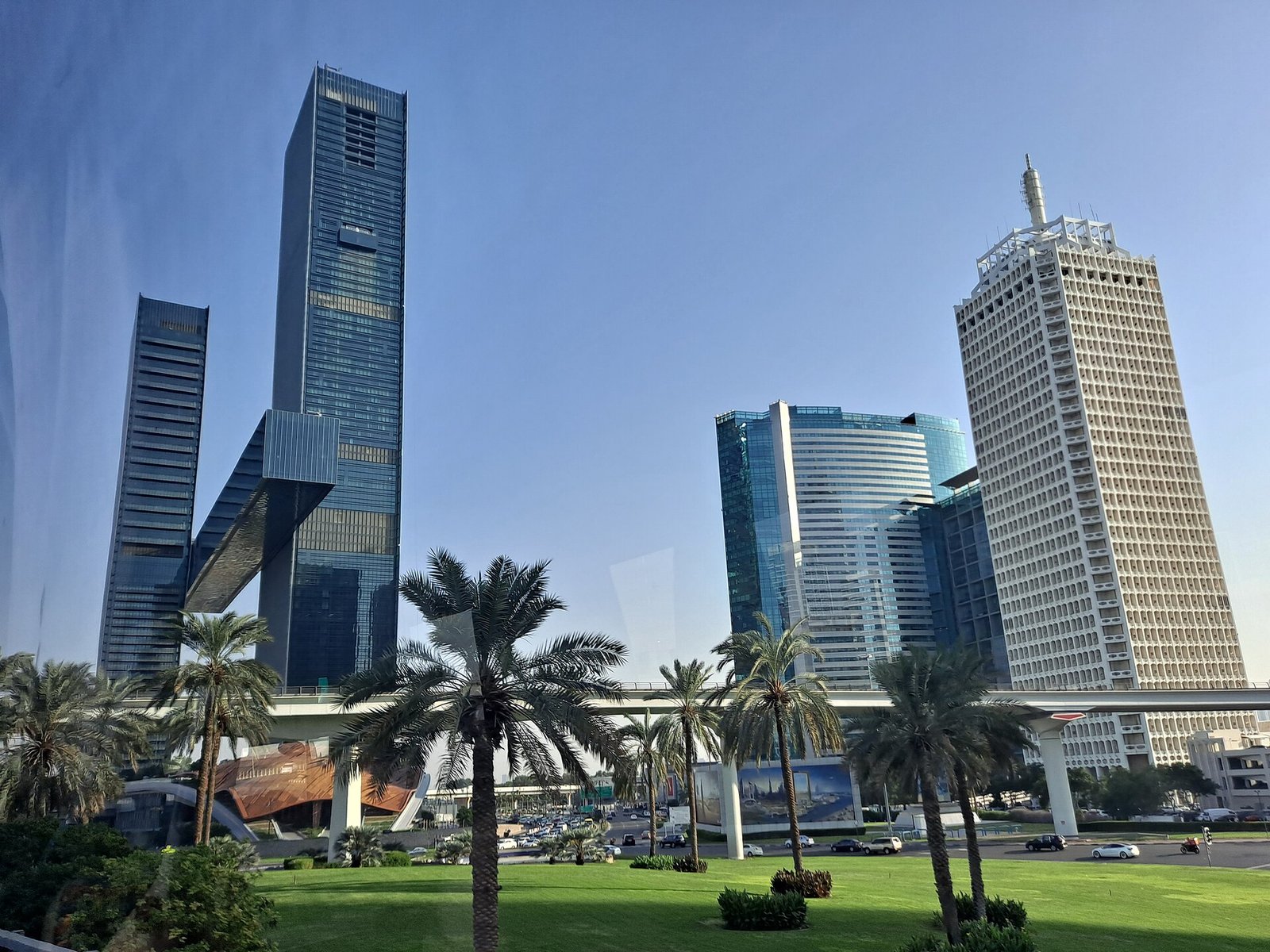
DIFC financial regulation governs banks, investment and fund managers, custodians, insurers, crypto token firms and issuers in the Dubai International Financial Centre. The DFSA licenses and supervises them under DIFC laws and its Rulebook, which changed repeatedly in 2026. This guide explains licences, capital, key individuals, supervision and the onshore boundary.
Key pointSince 1 July 2026, DFSA activity-based capital requirements mean capital can rise with assets under management, assets safeguarded and trading volumes, so growth plans must now be matched by capital planning.
At a glance
DFSA is the regulator
The Dubai Financial Services Authority licenses and supervises firms under the Regulatory Law 2004, the Markets Law 2012 and the Collective Investment Law 2010.
Eight prudential categories
Categories run from 1 for deposit-taking banks to 4 for advisers and arrangers, plus 3D for money services and 5 for Islamic institutions.
Activity-based capital
From 1 July 2026, capital charges linked to assets safeguarded, assets under management and trading volumes apply alongside base capital.
Crypto token self-assessment
From 12 January 2026 the DFSA stopped publishing Recognised Crypto Tokens; firms must document their own suitability assessment for each token.
Fund regime under review
Consultation Paper No. 173, published in July 2026, proposes the biggest overhaul of DIFC fund rules since 2010; final rules were pending at the time of writing.
Swipe or scroll →
What DIFC financial regulation covers
DIFC financial regulation is the framework under which the Dubai Financial Services Authority (DFSA) licenses and supervises financial services carried on in or from the Dubai International Financial Centre. It covers banks, investment firms, asset and fund managers, insurers and intermediaries, custodians, crowdfunding and money services businesses, crypto token firms, exchanges and the issuers whose securities are offered or listed in the Centre.
The DIFC is a financial free zone with its own civil and commercial laws based on common-law principles, its own courts and an independent regulator modelled on leading international supervisors. For firms serving the Gulf, Africa and South Asia from Dubai, the combination of an internationally recognised rulebook, English-language proceedings and a deep ecosystem of banks, managers and advisers is the main draw.
A business needs advice on DIFC financial regulation as soon as it plans a regulated activity in the Centre, and the questions continue throughout its life: which licence and category, which individuals, how much capital, how to change control, how to respond to supervisory findings, and what happens when the rules change, as they have repeatedly in 2025 and 2026.

The legal framework for DIFC financial regulation
How the DIFC fits within the UAE
The DIFC was established under the federal law permitting financial free zones, Federal Law No. 8 of 2004, and its status within Dubai is now set by Dubai Law No. 5 of 2021 concerning the Dubai International Financial Centre. Inside the Centre, federal civil and commercial laws are replaced by DIFC legislation, but federal criminal law, including anti-money laundering, counter-terrorist financing and sanctions law, still applies.
Four bodies matter. The DIFC Authority runs the Centre and, through the Registrar of Companies, incorporates and registers entities. The DFSA is the independent financial regulator. The DIFC Courts hear civil and commercial disputes in English under common-law procedure. The Financial Markets Tribunal hears references against certain DFSA decisions. The DIFC website publishes the Centre's laws and regulations.
The DFSA's laws and Rulebook
The DFSA administers several DIFC laws. The Regulatory Law (DIFC Law No. 1 of 2004) sets the financial services prohibition, the authorisation regime, supervisory powers and enforcement. The Markets Law (DIFC Law No. 1 of 2012) governs offers of securities, listings, disclosure and market abuse. The Collective Investment Law (DIFC Law No. 2 of 2010) governs funds. The Law Regulating Islamic Financial Business covers Islamic finance.
The detail is in the DFSA Rulebook, organised in modules: General (GEN), Conduct of Business (COB), the prudential modules for investment, banking and insurance business (PIB and PIN), Collective Investment Rules (CIR), Authorised Market Institutions (AMI), Markets (MKT), Anti-Money Laundering (AML), Islamic Finance Rules (IFR) and Fees (FER). A Regulatory Policy and Process sourcebook explains how the DFSA uses its powers.
What has changed in 2025 and 2026
DIFC financial regulation has changed significantly over the past two years. Revised prudential rules introduced activity-based capital requirements, which apply from 1 July 2026 and add capital charges linked to assets safeguarded, assets under management and trading volumes. Firms operating alternative trading systems moved into Category 3A. Further miscellaneous PIB and COB amendments followed in July 2026.
From 12 January 2026 the DFSA stopped publishing a list of Recognised Crypto Tokens, so authorised firms must now carry out and document their own suitability assessment for each token. The DFSA amended its AML module in March 2026.
In May 2026 it made amendments to the GEN, PIB, Glossary and IFR modules that take effect on 1 January 2027. In July 2026 it published Consultation Paper No. 173, the most substantial review of its fund regime since 2010, proposing among other things to abolish the External Fund Manager regime and to remove specialist fund classifications; at the time of writing the final rules had not been made.
Licence categories and prudential requirements
The DFSA assigns each firm a prudential category based on the Financial Services on its licence; the highest-risk activity sets the category. The category determines base capital, the risk and activity-based capital calculations, liquidity and reporting.
| Category | Typical activities | Prudential profile |
|---|---|---|
| Category 1 | Accepting deposits; managing unrestricted profit-sharing investment accounts | Full banking capital and liquidity framework |
| Category 2 | Providing credit; dealing as principal; market making | Significant base and risk capital |
| Category 3A | Dealing as agent; operating an alternative trading system | Base capital plus activity-based capital from July 2026 |
| Category 3B | Providing custody, including crypto token custody; fund trusteeship | Higher base capital reflecting client asset risk |
| Category 3C | Managing assets and collective investment funds | Base capital, expenditure-based and activity-based requirements |
| Category 3D | Money services | Base capital and safeguarding requirements |
| Category 4 | Advising, arranging, insurance intermediation, fund administration | Lowest base capital, expenditure-based minimum |
| Category 5 | Islamic financial institutions managing unrestricted profit-sharing accounts | Banking-equivalent requirements |
Exact figures are set in PIB and change with rule amendments, so model capital using the current Rulebook and the latest rulemaking instruments. A firm that holds the minimum without a buffer will struggle to absorb losses, growth or a supervisory add-on.
Key decisions before applying
DIFC or ADGM?
The DIFC and ADGM offer similar common-law environments with independent regulators. The choice turns on detail: the specific rules for your activity, supervisory approach, cost, talent, proximity to clients and investors, and group preference. Asset managers should compare the DFSA's proposed fund reforms with ADGM's 2026 fund manager regimes. Our page on ADGM financial regulation sets out the Abu Dhabi alternative.
Branch or subsidiary?
Foreign groups can enter the DIFC through a branch or a locally incorporated subsidiary. A branch draws on the parent's capital and home supervision and can be quicker to set up, but the DFSA will scrutinise the home regulator and the group's willingness to support the branch. A subsidiary costs more in capital and governance, yet ring-fences liabilities and is usually the better base for a long-term regional platform or a later sale.
Licence, representative office or innovation testing?
A full DFSA licence is needed to carry on Financial Services in or from the DIFC. Groups that only want to market their foreign entity's services can consider a representative office, which cannot itself provide financial services. Fintech firms with genuinely novel models can apply for the Innovation Testing Licence, a restricted licence launched in 2017 for testing for a limited period before full authorisation. The DIFC's separate Innovation Licence is a commercial licence for technology firms and does not permit any regulated financial activity.
Serving onshore UAE clients
A DFSA licence covers activity in and from the DIFC. Onshore UAE clients and marketing can engage the Capital Market Authority (CMA), which replaced the Securities and Commodities Authority from 1 January 2026, or the Central Bank, whose powers were widened by Federal Decree-Law No. 6 of 2025. Map onshore touchpoints and marketing before launch; see our page on financial promotions.
Since July 2026, activity-based capital means a growing asset manager or custodian can see its capital requirement rise with its business. Build that into the business plan and board reporting, rather than treating capital as a fixed licensing cost.
The authorisation process step by step
The DFSA does not promise fixed timelines, and application quality drives speed. A typical application under DIFC financial regulation runs as follows.
- Define activities and category. Match each service to a DFSA Financial Service, confirm the resulting prudential category, and identify any onshore or home-country licences also needed.
- Engage early with the DFSA. Discuss the proposal with the authorisation team before filing. Early feedback on the model, structure and individuals avoids rework.
- Assemble key individuals. Identify suitable candidates for the Senior Executive Officer, Finance Officer, Compliance Officer and Money Laundering Reporting Officer roles. Applications without credible candidates do not progress.
- Prepare the application pack. Regulatory business plan, financial projections and capital analysis, governance and organisational chart, compliance, AML and risk manuals, outsourcing and technology arrangements, and individual applications.
- File and respond. Submit the application with fees and answer the DFSA's questions; expect interviews of key individuals.
- Incorporate and satisfy conditions. Following the DFSA's in-principle decision, incorporate the entity or register the branch with the DIFC Registrar of Companies, inject capital, secure premises and complete systems.
- Receive the licence and go live. Once conditions are met, the DFSA issues the licence and the firm begins regulated business under supervision.
Ongoing obligations and supervision
DIFC financial regulation is a continuing relationship. The DFSA supervises on a risk basis, using returns, risk assessments, thematic reviews, surveys and visits.
People and governance. Authorised Individuals must remain fit and proper; changes in key roles and controllers need notification or approval. Boards must oversee risk, compliance and culture.
Conduct. Client classification, suitability, disclosure, conflicts, client money and safe custody rules apply, with record-keeping and complaints handling. Our page on market conduct covers market abuse and conduct risk.
Prudential. Capital, including the new activity-based requirements, and liquidity must be maintained at all times, with regular prudential returns and audited accounts.
Financial crime. AML, sanctions and counter-proliferation financing controls must be risk-based and documented, with goAML reporting under federal law. See our page on AML compliance.
Technology, cyber and AI. The DFSA expects firms to manage cyber risk and runs periodic cyber risk self-assessments; in 2026 it also surveyed authorised firms on their use of artificial intelligence. Data protection duties arise under the DIFC Data Protection Law; see our page on DIFC data protection.
Markets, offers and listings
The Markets Law and the MKT module govern offers of securities to the public in or from the DIFC, prospectus approval, listing on the Official List of Securities maintained by the DFSA, continuing disclosure by listed issuers, and market abuse. The Centre's exchanges, such as Nasdaq Dubai, are Authorised Market Institutions supervised under the AMI module. Sukuk, bonds and equity issuers using the DIFC should treat disclosure, inside information and market conduct duties as continuing obligations that apply long after the offer closes.
Exempt offers to professional investors carry lighter requirements, but the boundary between an exempt offer and a public offer, and between DIFC and onshore marketing, needs careful handling. Our page on securities regulation explains how the DIFC regime interacts with the CMA's rules for onshore offers.
Enforcement and the courts
The Regulatory Law gives the DFSA powers to investigate, require documents and interviews, impose fines, censure firms and individuals, restrict licences and prohibit individuals. Many decisions can be referred to the Financial Markets Tribunal, and some matters proceed in the DIFC Courts. The DFSA publishes enforcement outcomes and regular alerts about firms falsely claiming DFSA authorisation. Our page on regulatory investigations explains how to respond.
In the DIFC, licensing is the entry fee. The real test is whether your capital, people and controls keep pace with your business and with a Rulebook that changes several times a year.
Risks and common mistakes
Applying for more permissions than you need
Adding activities "for flexibility" can move a firm into a higher prudential category, raise capital and staffing requirements, and slow the application. Under the activity-based capital rules applying from July 2026, certain activities also generate capital charges as the business grows. Apply for the Financial Services you will actually provide in the near term and plan to vary the licence when the business case is proven. A focused application is also easier for the DFSA to assess, because the business plan, controls and individuals all match the activities requested.
Treating the Innovation Licence as a financial licence
The DIFC Innovation Licence is a commercial licence for technology businesses. It does not permit advising clients, arranging deals, holding client money or any other Financial Service. Fintech founders sometimes start operating on it and drift into regulated activity, which breaches the financial services prohibition. If the product involves regulated activity, plan for the Innovation Testing Licence or a full DFSA licence from the outset.
Missing Rulebook changes
The DFSA amends its Rulebook frequently, and 2026 alone brought capital, crypto token, AML and fund changes, with further amendments due on 1 January 2027 and proposed fund reforms pending. Firms that rely on a compliance manual written at authorisation fall behind quickly. Assign responsibility for tracking DFSA notices and consultation papers, run a short impact assessment for each change, and record what was updated and when.
Weak crypto token assessments
Since January 2026, authorised firms dealing in crypto tokens must assess and document each token's suitability themselves rather than relying on a DFSA list. A thin or generic assessment exposes the firm if a token fails or is linked to misconduct. Assessments should cover the token's structure, governance, liquidity, market integrity, financial crime risk and custody arrangements, and be refreshed as circumstances change. Our page on virtual asset regulation compares the UAE regimes.
Group outsourcing without local control
Many DIFC firms rely on group functions abroad for compliance, technology and operations. The DFSA permits outsourcing, but the DIFC firm remains responsible and must be able to show oversight, access to data and records, audit rights and exit plans. Where the DIFC entity's senior management cannot explain or control outsourced functions, supervisors will treat it as a governance failure. Our page on financial services outsourcing sets out the expectations.
Cross-border angle
The DIFC's rulebook draws heavily on UK and international standards, which helps UK and European groups, but no foreign permission passports into the Centre. Branch applications rely on the home regulator's supervision, so the DFSA will consider the quality of home-state regulation and information-sharing arrangements.
Saudi Arabia is a major market for DIFC firms, but providing services into the Kingdom requires compliance with Capital Market Authority and Saudi Central Bank rules. Indian groups use the DIFC for wealth and asset management and must consider India's outbound investment and exchange control rules; Chinese and Singaporean institutions often run regional platforms in the DIFC alongside home-regulator requirements on outsourcing and group supervision.
For Bangladeshi investors and groups, any DIFC investment must first clear Bangladesh's foreign exchange rules on outward investment. TRW & Co's offices in Dhaka, Singapore and London help coordinate home-country approvals with the DFSA process.
How TRW & Co helps with DIFC financial regulation
Perimeter and structuring
We map your model to DFSA Financial Services and categories, compare the DIFC with ADGM and onshore regulators, and identify home-country and onshore licensing needs.
DFSA applications
We prepare and review business plans, manuals and individual applications, manage DFSA questions and track conditions through to licence.
Funds and asset management
We advise on fund structures and on the impact of the DFSA's proposed fund reforms, including the future of external fund manager arrangements. See our page on asset management.
Rule-change implementation
We run gap analyses on capital, crypto token, AML and other Rulebook changes and update policies, procedures and board reporting.
Transactions and change in control
We advise on acquisitions and disposals of DIFC regulated firms, controller approvals and group restructurings.
Supervision and enforcement
We support firms through supervisory reviews, breach notifications and investigations. For proceedings in the DIFC Courts we work alongside registered practitioners; see DIFC Courts proceedings.
Explore our practices or contact us to discuss a DFSA application or compliance review.
Checklist for decision-makers
- Have we mapped every service to a DFSA Financial Service and confirmed our prudential category?
- Have we compared the DIFC with ADGM and onshore options for our clients, products and investors?
- Do we have credible candidates for Senior Executive Officer, Finance Officer, Compliance Officer and MLRO?
- Does our capital plan include activity-based capital requirements and a buffer for growth?
- Are onshore UAE and home-country licensing questions resolved before launch?
- Who tracks DFSA rule changes, including amendments taking effect on 1 January 2027 and the pending fund reforms?
- If we deal in crypto tokens, are our token suitability assessments documented and current?
- Can our DIFC management show real oversight of group outsourcing, cyber risk and AI use?
DIFC financial regulation rewards firms that plan for change. A precise licence scope, a realistic capital plan and a compliance function that keeps up with the Rulebook make authorisation faster and supervision more predictable.
Frequently asked questions
01Who regulates financial services in the DIFC?
The Dubai Financial Services Authority (DFSA) is the independent regulator for financial services in and from the DIFC. It administers the Regulatory Law, the Markets Law, the Collective Investment Law and other DIFC laws, and the DFSA Rulebook. The DIFC Registrar of Companies incorporates and registers entities, the DIFC Courts hear disputes, and the Financial Markets Tribunal hears references against certain DFSA decisions.
02How long does it take to get a DFSA licence?
The DFSA does not commit to fixed timelines. Speed depends on the complexity of the activities, the completeness and quality of the application, and the suitability and availability of key individuals. Straightforward, well-prepared applications from established groups tend to move faster than novel models or applications with gaps. Engaging the DFSA before filing and having credible candidates for key roles are the most effective ways to save time.
03Can a DIFC firm serve clients onshore in the UAE?
A DFSA licence covers activity in and from the DIFC. Serving or marketing to onshore UAE clients may require authorisation from the Capital Market Authority (formerly the SCA) or the Central Bank, whose perimeter was widened by Federal Decree-Law No. 6 of 2025. Whether a particular model is permitted depends on the activity, client type and marketing method, so take advice before launching any onshore-facing service.
04What are activity-based capital requirements?
They are capital charges the DFSA introduced in its prudential rules, applying from 1 July 2026, that scale with a firm's business: assets safeguarded and administered, assets under management, and cash and derivatives trading volumes. They sit alongside base capital and expenditure-based requirements, and a firm must hold the highest applicable amount. Growing custodians, asset managers and brokers should model them in their business plans.
05What is the Innovation Testing Licence?
It is a restricted DFSA licence, launched in 2017, that allows fintech firms to test innovative financial services in the DIFC for a limited period under tailored conditions. At the end of testing, the firm must meet full authorisation requirements or stop the regulated activity. It is different from the DIFC Innovation Licence, a commercial licence for technology companies that does not permit any regulated financial activity.
06What changes are coming to DIFC fund rules?
In July 2026 the DFSA published Consultation Paper No. 173, the most substantial review of its fund regime since 2010. Proposals include removing specialist fund classifications, allowing employee co-investment vehicles, abolishing the External Fund Manager regime with a transition period, reforming master-feeder structures and extending venture capital relief. The consultation closed in September 2026 and final rules had not been made at the time of writing.
07What happens if the DFSA takes enforcement action?
The DFSA can investigate, compel documents and interviews, and impose fines, censures, licence restrictions and prohibitions on individuals. Many decisions can be referred to the Financial Markets Tribunal, and some matters proceed in the DIFC Courts. Outcomes are often published. Early legal advice, careful document production and consistent explanations make a significant difference to how an investigation develops.
Sources and official materials
- Dubai Financial Services Authority — DFSA laws, Rulebook, notices and consultation papers
- DFSA Notice of Amendments to Legislation, May 2026 — GEN, PIB, GLO and IFR amendments effective 1 January 2027
- Dubai International Financial Centre — DIFC laws, Registrar of Companies and data protection
- DIFC Courts — Common-law courts of the DIFC
- Federal Decree-Law No. 6 of 2025 (UAE Legislation) — Central Bank law and the onshore perimeter
- Capital Market Authority (formerly SCA) — Federal securities regulator for onshore activity
General information only, current as at 27 October 2026. It is not legal advice and does not create a lawyer–client relationship. UAE law differs between the onshore jurisdiction, the DIFC, ADGM and the free zones, and changes frequently; check current official sources and take advice on the facts of your matter.



