
TRW & Co · Shipping, Aviation & Industries
Shipping and Maritime Law in the UAE
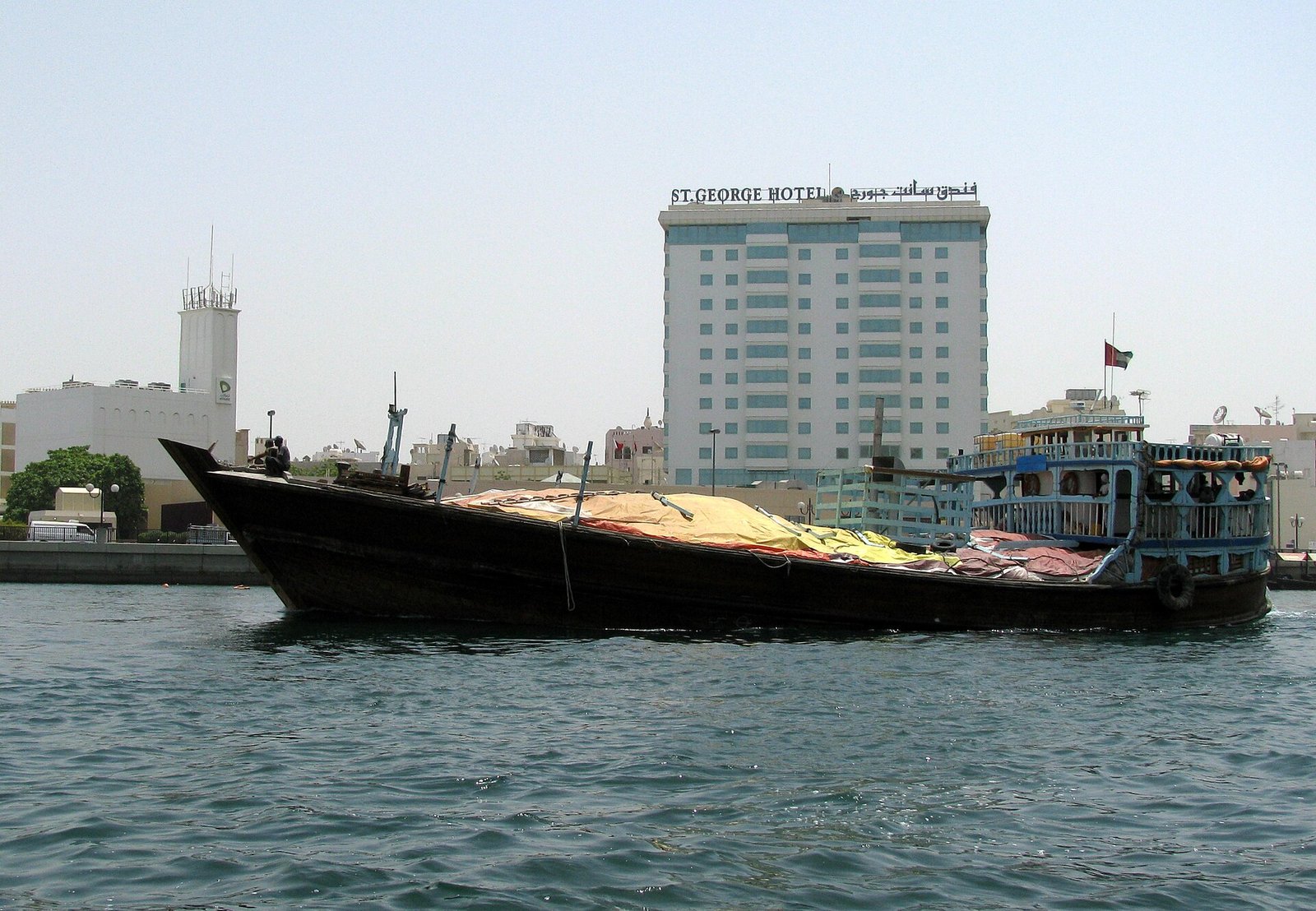
Maritime law in the UAE was rewritten by Federal Decree-Law No. 43 of 2023, in force since March 2024. The new law widens ship arrest, opens the UAE flag to foreign-owned groups with a local base and shortens key deadlines. This guide covers arrest, registration, cargo claims, liability limits and how to use UAE ports to secure claims worldwide.
Key pointUnder the 2023 Maritime Law a claimant can arrest any ship the debtor owns at the date of the application, not only ships owned when the debt arose, but must then file the substantive claim within five working days or risk losing the arrest.
At a glance
New Maritime Law
Federal Decree-Law No. 43 of 2023 replaced the 1981 Commercial Maritime Law and has been in force since 29 March 2024.
Wider sister-ship arrest
Any vessel owned by the debtor when the arrest application is filed can be arrested, except for claims about ownership, mortgages or ship sales.
Club LOUs accepted
Courts may accept a P&I club letter of undertaking as security to release a vessel, rather than only cash or a local bank guarantee.
Five-working-day follow-on
After an arrest the claimant must file the substantive claim within five working days, and the court fixes a hearing within 15 days.
Short cargo time bar
Cargo claims against the carrier are generally barred one year after delivery or the date when delivery should have taken place.
Swipe or scroll →
What maritime law in the UAE covers
Maritime law in the UAE governs the ownership, registration, financing, chartering, operation and arrest of ships, the carriage of goods and passengers by sea, collisions, salvage, marine insurance and the employment of crew. It matters to shipowners and operators, charterers, traders, bunker suppliers, banks financing vessels, P&I clubs and insurers, and the many businesses whose cargo moves through Jebel Ali, Khalifa Port, Fujairah, Khor Fakkan and Sharjah.
The UAE sits on the main east-west trade lanes and Fujairah is one of the world's largest bunkering hubs, so the country's courts see a steady flow of arrest applications, cargo claims and charterparty disputes. Many involve parties with no other connection to the UAE: a vessel calls, a creditor acts, and a dispute about a contract made in London or Singapore lands before a local judge.
A maritime matter usually becomes legal at one of three points: when a debt goes unpaid and the creditor learns the debtor's ship is due in port; when cargo arrives short, damaged or late; or when a casualty, collision or detention throws commercial plans into disarray. In each case the clock starts immediately, because maritime time bars are short and vessels do not wait.

The legal framework: the 2023 Maritime Law
The centrepiece is Federal Decree-Law No. 43 of 2023 on the Maritime Law, which came into force on 29 March 2024 and replaced the Commercial Maritime Law, Federal Law No. 26 of 1981. The new law modernises registration, extends the list of maritime claims, makes ship arrest more predictable and moves liability limits closer to international norms. Implementing regulations were anticipated for several areas, including mortgages and limitation funds, so practice is still settling in places.
Registration and ownership
The Ministry of Energy and Infrastructure keeps the ship register. Under the new rules, a vessel may fly the UAE flag if it is majority owned by UAE or GCC nationals or companies, or by persons with a domicile, head office or ship management office in the UAE. That opens the flag to many internationally owned groups with a genuine UAE base. Age limits apply at registration, with stricter limits for passenger ships, and the ministry must approve specifications and class certification.
The law also introduces a register for ships under construction, so shipbuilding contracts can be recorded, and allows bareboat charter registration in both directions: a foreign-flagged vessel chartered by a UAE party can be registered here, and a UAE-flagged vessel can be registered abroad at the bareboat charterer's request with ministry approval. Co-owners have pre-emption rights over a share being sold.
Maritime liens and priority
The law sets out categories of privileged claims that attach to the ship and freight without registration, including crew wages, salvage, port and pilotage dues and casualty compensation. Liens are short-lived: generally one year, shorter for certain contracts concluded by the master or agent, and extendable where the ship cannot be arrested in UAE waters. A sale in the proper form extinguishes them, leaving lienholders to claim against the proceeds within a short window.
Courts, regulators and institutions
There is no specialist admiralty court. Maritime claims go to the commercial chambers of the onshore courts in the emirate where the vessel lies or the defendant is based: the Dubai Courts, the Abu Dhabi Judicial Department, or the federal courts in other emirates. Proceedings are in Arabic. The DIFC and ADGM Courts can hear contractual shipping disputes where parties opt in, but arrest of a vessel in a UAE port is an onshore remedy.
For arbitration, the Emirates Maritime Arbitration Centre was abolished by Dubai Decree No. 34 of 2021, with its functions consolidated into the Dubai International Arbitration Centre. Many charterparties still provide for London arbitration, and the UAE has been a party to the New York Convention since 2006, so foreign awards can be enforced locally. Our page on arbitral award enforcement explains the procedure.
Ship arrest: the UAE's most-used maritime remedy
Precautionary arrest is often the fastest way to obtain security for a maritime claim. The 2023 law made three changes that matter in practice.
| Issue | Under the 1981 law | Under Federal Decree-Law No. 43 of 2023 |
|---|---|---|
| Qualifying claims | Closed list of maritime debts | Wider list including bunkers and supplies, port and canal dues, environmental damage, wreck removal, insurance premiums, agency fees and ship-sale disputes |
| Sister ships | Debtor must have owned the vessel when the debt arose | Any vessel the debtor owns when the arrest is applied for, except for claims about ownership, mortgage or sale |
| Security to release | Cash or local bank guarantee in practice | P&I club letter of undertaking or guarantee from an approved institution may be accepted, subject to the court |
| Applicant's counter-security | Discretionary | Applicant must provide financial security covering crew and vessel costs during the arrest |
| Follow-on claim | Substantive claim within eight days | Substantive claim within five working days; hearing fixed within 15 days |
The application is made in writing to the competent court with evidence of the maritime debt, through a UAE-licensed advocate holding a notarised power of attorney. Foreign documents must be translated into Arabic by a licensed translator and, where issued abroad, attested. Bunkers and freight can also be attached under the general Civil Procedure Law.
There is no specific wrongful-arrest regime, and damages are rarely awarded unless the arrest was obtained by fraud. That makes UAE ports attractive for claimants. It also means owners must respond quickly and commercially: putting up a club letter of undertaking is often cheaper than days of detention. For other urgent remedies, see our page on emergency and interim relief.
In a UAE port, the side that has its documents translated and its security ready on day one usually sets the terms of the negotiation.
Charterparties, carriage and liability
Carriage of goods and cargo claims
The UAE has not ratified the Hague or Hague-Visby Rules, but the carriage provisions of the 2023 law draw on them, and package and weight limits are now expressed in Special Drawing Rights rather than dirhams. Cargo claims against the carrier are generally time-barred one year after delivery or the date delivery should have occurred. Bills of lading often incorporate foreign law and jurisdiction, and UAE courts will look closely at whether such clauses bind a consignee who never signed them.
Limitation of liability
Global limitation follows the 1976 Convention on Limitation of Liability for Maritime Claims, as amended by the 1996 Protocol, and owners can constitute a limitation fund in the UAE courts. Whether a club letter of undertaking can stand in for a cash fund is one of the points practice is still clarifying.
Charterparties and ship sales
Most charterparties used in the region are on standard forms with English law and London arbitration. Disputes about hire, off-hire, demurrage and bunker quality are common, and UAE arrest is frequently used as leverage to obtain security for a foreign arbitration. Ship sales typically use standard memoranda of agreement; the 2023 law now lists sale-contract disputes among the claims that can support arrest. Where vessels are financed, read this page with our guides to trade finance and secured lending.
Time bars under maritime law in the UAE are short and, for several claims, shorter than under the 1981 law. Diarise the one-year cargo bar from delivery, the lien periods and any contractual bar in your charterparty, and send protective notices early. A claim that is good on the merits is worthless if it is filed a week late.
Crew, ports, wrecks and the environment
Beyond commercial claims, maritime law in the UAE imposes operational duties that owners and managers must build into their compliance programmes. These rarely make headlines until a vessel is detained or abandoned, at which point they become very expensive.
Crew employment and welfare
The 2023 law prohibits the employment of anyone under 16 on board, and crew wages rank among the privileged claims that attach to the ship. Abandoned crews have been a recurring problem in Gulf waters, and authorities now have clearer powers to act against owners who leave vessels and seafarers unsupported. UAE-based ship managers should also consider how onshore staff fall under the federal Labour Law, Federal Decree-Law No. 33 of 2021, as distinct from seafarers' articles.
Port authorities, wrecks and pollution
Port and harbour rules are set at emirate level by the relevant port and maritime authorities, while the Ministry of Energy and Infrastructure handles federal registration and flag-state functions. The expanded list of arrestable claims now includes environmental damage and wreck removal costs, which gives port authorities and salvors a clearer route to security. UAE-flagged vessels are also subject to ministry requirements on safe ship recycling.
For owners, the practical lesson is that a casualty in UAE waters can generate several claims at once: salvage, wreck removal, pollution clean-up, cargo and crew. Under maritime law in the UAE many of these can support an arrest of the casualty vessel or a sister ship, so insurers and owners need a coordinated security strategy from the first day. Our oil and gas practice regularly sees these issues in offshore and tanker operations.
Where maritime law in the UAE intersects with other regimes
Shipping companies operating from the UAE also face corporate tax, VAT on certain supplies, free zone licensing and customs rules. Owning, managing and operating ships are among the activities that can qualify for the free zone regime under corporate tax, but the conditions are technical and should be confirmed for each structure. Logistics groups often combine a free zone ship management company with onshore agency and freight-forwarding entities, and the allocation of contracts between them affects both tax and arrest exposure.
The process for a maritime claim in the UAE
- Preserve the position. Notify underwriters and the P&I club, issue protest letters, and secure the bill of lading, mate's receipts, surveyor reports and log extracts before the vessel sails.
- Check time bars and forum. Identify the governing law, jurisdiction or arbitration clause and every applicable time bar. Decide whether to arrest here as security for proceedings elsewhere.
- Prepare the arrest file. Assemble proof of the maritime debt, ownership evidence for the target vessel, an attested power of attorney and Arabic translations. Arrange the counter-security the court will require.
- File and serve. The court considers the application on the papers. Once granted, notify the owner, charterer or agent and liaise with the port and harbour master.
- Bring the substantive claim. File the merits claim within five working days, or show that arbitration or foreign proceedings are under way, to keep the arrest alive.
- Negotiate security or release. Most arrests end with substitute security, usually a club letter of undertaking or bank guarantee, and release of the vessel.
- Judgment, sale or enforcement. If unpaid, the claimant can pursue judicial sale through a court-supervised auction, or enforce a foreign award or judgment against the security.
Documents and evidence to assemble
Contract documents
Charterparty and recap, bill of lading, booking note, bunker supply terms or shipbuilding contract. Identify the jurisdiction, law and time-bar clauses at once.
Ownership evidence
Registry extracts, Equasis-type data and class records proving who owns the target vessel at the date of the application, which is the test for sister-ship arrest under the 2023 law.
Proof of the debt
Invoices, delivery receipts, statements of account, hire statements and correspondence acknowledging liability. Courts want a clear, documented maritime debt.
Technical records
Survey reports, deck and engine logs, cargo condition reports, photographs and bunker samples. These decide cargo and quality claims and are hard to recreate later.
Risks and common mistakes
Arresting the wrong vessel
Sister-ship arrest turns on who owns the vessel when the application is filed. Single-ship companies, recent transfers and bareboat structures can defeat an arrest that looked straightforward. Claims about ownership, mortgages or sale cannot be pursued against sister ships at all. Verify ownership from registry records immediately before filing, and be ready to explain to the court why the vessel is liable. A failed arrest wastes counter-security costs and can harden the other side's position.
Missing the follow-on deadline
An arrest is precautionary. If the claimant does not file the substantive claim within the short statutory period, or show that arbitration or foreign proceedings have started, the arrest can lapse. Foreign claimants sometimes assume their London arbitration timetable governs. It does not. Start the merits proceedings, or at least the arbitration notice, in parallel with the arrest so that the UAE court sees a live claim.
Assuming English time bars and limits apply
Contractual choice of English law does not displace mandatory UAE rules in every case, particularly for cargo claims brought by consignees and for lien periods. The UAE also applies its own approach to the incorporation of charterparty terms into bills of lading. Check both the contractual and the UAE statutory time bars, and use the shorter as your working deadline.
Overlooking sanctions exposure
Gulf trades carry sanctions risk: vessel ownership chains, ship-to-ship transfers and cargo origin all attract scrutiny from banks, insurers and port authorities. The UAE implements UN sanctions, while US, UK and EU measures affect counterparties and payment flows. A sanctions issue can stop payment under a letter of credit or void insurance cover. Screen early, and read our guidance on sanctions and export controls.
Poor translation and attestation
UAE courts work in Arabic. A power of attorney that is not notarised and attested, or a translation that misstates a key clause, can delay an arrest by days while the vessel sails. Keep pre-attested powers of attorney for repeat claimants and work with licensed legal translators who understand shipping terms.
Cross-border angle: maritime law in the UAE and the wider network
Almost every shipping dispute in the UAE has a foreign dimension. The common pattern is security obtained here for proceedings in London, Singapore or elsewhere, followed by enforcement against assets in the UAE.
United Kingdom and Singapore. English law and London arbitration dominate charterparties, and Singapore is the main Asian alternative. A UAE arrest can secure a London or Singapore claim, and awards from both are enforceable under the New York Convention. See our page on international arbitration.
Bangladesh and India. Chattogram is a major ship-recycling and bulk port, and many UAE-managed vessels trade to Bangladesh and India. Claims often involve cargo interests in Dhaka or Chattogram and ship recycling sales. TRW & Co's offices in Dhaka and Chattogram coordinate parallel steps, including arrest in Bangladesh where the vessel is headed there next.
China, Saudi Arabia and the GCC. Chinese yards build and finance many vessels in the region, and Chinese courts and arbitration bodies feature in shipbuilding disputes. Saudi, Omani and Qatari ports are alternative arrest venues within a few days' sailing, each with its own procedure.
How TRW & Co helps with maritime law in the UAE
We advise owners, charterers, traders, financiers and insurers on strategy, documents and coordination. Where representation before UAE onshore courts or the DIFC/ADGM Courts is required, we work alongside locally licensed advocates and registered practitioners.
Arrest and release strategy
We assess whether a UAE arrest is the right lever, verify ownership, prepare the arrest file and counter-security, and negotiate release against appropriate security.
Contracts and registration
We review charterparties, bills of lading, ship sale and shipbuilding contracts, and advise on UAE flag eligibility, bareboat registration and mortgage priority.
Claims and casualties
We manage cargo, collision, salvage and insurance claims, coordinating surveyors, P&I correspondents and underwriters. Our insurance and reinsurance team handles coverage questions.
Cross-border enforcement
We align UAE security with arbitration or litigation abroad and enforce awards and judgments against vessels and other UAE assets.
We also work closely with our aviation and customs and trade compliance teams on logistics businesses. See our full list of practices.
Checklist for decision-makers
- Diarise every time bar, including the one-year cargo bar and lien periods.
- Keep attested powers of attorney ready for UAE proceedings.
- Check vessel ownership on the date you intend to apply for arrest.
- Budget for the counter-security the court will require.
- Confirm that your P&I club can issue a letter of undertaking acceptable to the court.
- Align any UAE arrest with the forum chosen in your contract.
- Screen vessels, cargo and counterparties for sanctions exposure.
- Review UAE flag eligibility if your group has a UAE management base.
For urgent arrest or release questions, contact TRW & Co at info@trw.co.
Frequently asked questions
01Can I arrest a ship in the UAE for an unpaid bunker invoice?
Usually, yes. The 2023 Maritime Law lists supplies, bunkers and equipment among the maritime claims that can support a precautionary arrest. You will need documentary proof of the debt, evidence of who owns the target vessel, an attested power of attorney for a UAE advocate, Arabic translations and counter-security for the costs of the arrest. The substantive claim must then be filed within five working days. Contract terms naming the charterer rather than the owner as buyer can complicate matters, so check them first.
02Will a UAE court accept a P&I club letter of undertaking?
The 2023 Maritime Law allows a letter of guarantee from a P&I club or an approved financial institution as security to lift an arrest, subject to the court's approval. Before the new law, courts generally expected cash or a local bank guarantee. Practice is still developing, and acceptance can depend on the club and the wording. Owners should contact their club as soon as an arrest is threatened, and claimants should consider whether to agree LOU wording directly to avoid delay.
03Can a foreign-owned company register a ship under the UAE flag?
Possibly. The 2023 law allows registration where the vessel is majority owned by UAE or GCC nationals or companies, or by persons with a domicile, head office or ship management office in the UAE. Vessels must also meet age limits, approved specifications and class requirements. Bareboat charter registration is available in some cases. Groups with genuine UAE management operations should review eligibility, financing implications and mortgage registration with the Ministry of Energy and Infrastructure.
04Is there liability for wrongful arrest in the UAE?
The Maritime Law has no specific wrongful-arrest regime, and UAE courts rarely award damages for an arrest that later fails unless it was obtained through fraud or forged documents. The applicant must, however, provide counter-security for the costs of the arrest. For owners this means the practical response to an arrest is usually commercial: provide acceptable security quickly, then contest the claim on the merits in the chosen forum.
05Does a London arbitration clause stop a UAE arrest?
No. An arbitration clause does not prevent a claimant obtaining security in the UAE, and arrest in support of foreign arbitration is common. The claimant must show the court that the merits claim is being pursued, so the arbitration should be commenced promptly. The resulting award can later be enforced in the UAE under the New York Convention, to which the UAE has been a party since 2006, subject to the limited grounds for refusal.
06How long do I have to bring a cargo claim?
Under the 2023 Maritime Law, claims against the carrier arising from a contract of carriage are generally time-barred one year from delivery or the date when delivery should have occurred. Other periods apply to liens, collision, passenger and insurance claims, and some were shortened by the new law. Your bill of lading or charterparty may also impose its own bar. Treat the shortest applicable period as your deadline and issue protective proceedings or obtain an extension in writing.
07What happened to the Emirates Maritime Arbitration Centre?
Dubai Decree No. 34 of 2021 abolished the Emirates Maritime Arbitration Centre and consolidated its functions into the Dubai International Arbitration Centre (DIAC). Contracts that still refer to EMAC are generally treated as referring to DIAC under the transitional arrangements, but the wording should be checked. New contracts should name an existing institution and seat, such as DIAC, London or Singapore, and say expressly whether parties may seek arrest as interim security.
Sources and official materials
- Federal Decree-Law No. 43 of 2023 on the Maritime Law — Official text of the Maritime Law
- Ministry of Energy and Infrastructure — Ship register and maritime regulation
- Dubai International Arbitration Centre — Arbitration institution that absorbed EMAC
- Dubai Courts — Onshore court for arrests in Dubai ports
- Abu Dhabi Judicial Department — Courts for Abu Dhabi ports including Khalifa Port
- UAE Legislation portal — Federal laws including the Civil Procedure Law
General information only, current as at 27 October 2026. It is not legal advice and does not create a lawyer–client relationship. UAE law differs between the onshore jurisdiction, the DIFC, ADGM and the free zones, and changes frequently; check current official sources and take advice on the facts of your matter.



