
TRW & Co · Private Wealth & Family
Family Offices in the UAE
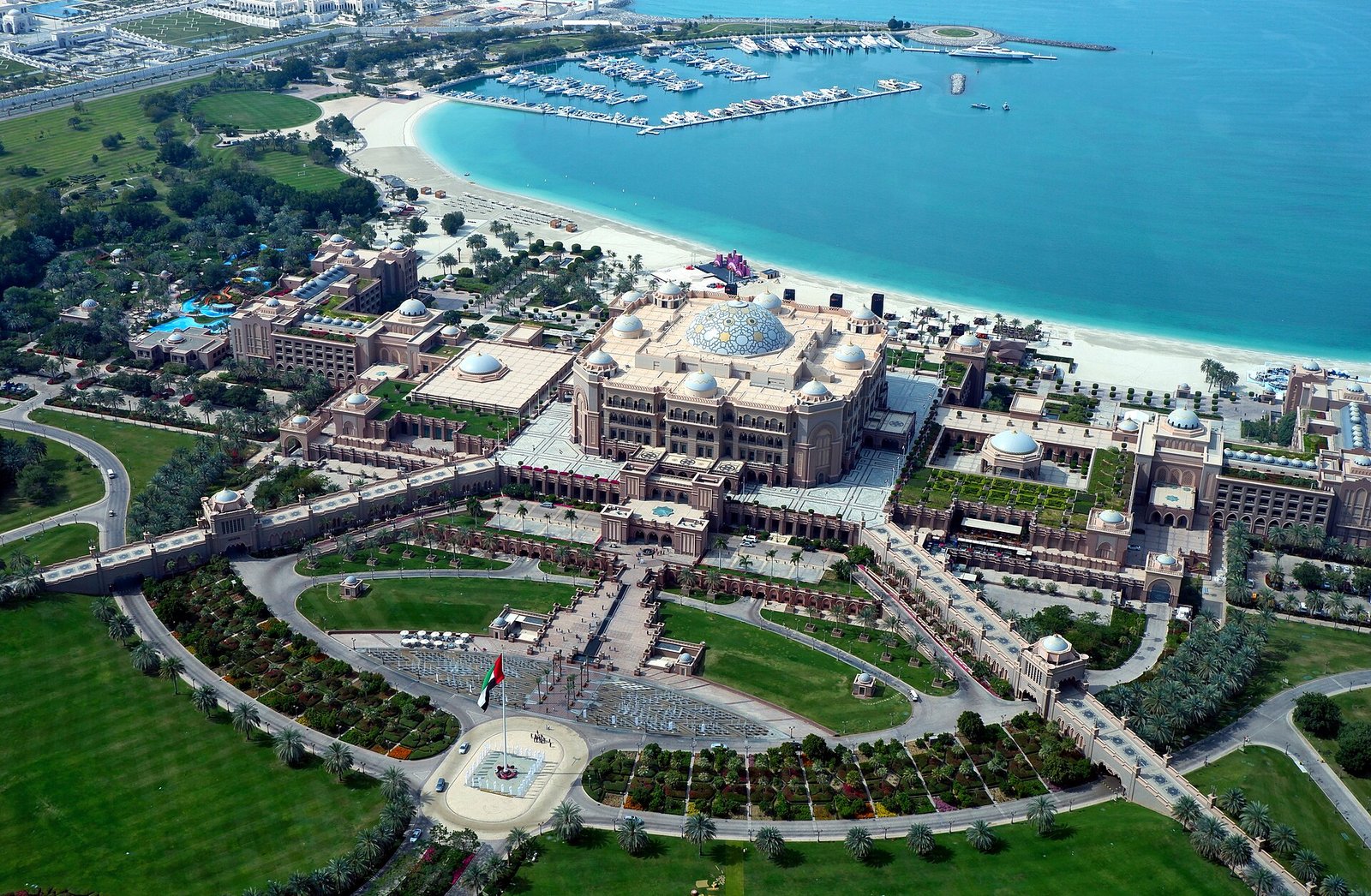
A family office in the UAE can give a family one well-governed home for its investments, property and succession plans. The DIFC and ADGM both run dedicated single family office regimes, foundations can be tax transparent under the Corporate Tax Law, and federal law now recognises family businesses. The best structures settle control and succession before forming any entity.
Key pointA family office company is taxable on its management fees even when the family foundation above it is tax transparent, and placing an operating business in the chain can break transparency for every entity below it.
At a glance
DIFC family office licence
The DIFC Family Arrangements Regulations, in force since 31 January 2023, set an aggregate minimum net asset requirement of USD 50 million in the published text.
ADGM single family office
Amendments effective 4 September 2024 let ADGM single family offices register as Restricted Scope Companies, keeping owners and directors off the public register.
Family Foundation transparency
Article 17 of the Corporate Tax Law lets qualifying foundations apply to be tax transparent, so income is attributed to beneficiaries rather than taxed in the foundation.
Single versus multi-family
Serving one defined family is generally unregulated in the financial centres; managing unrelated families usually needs DFSA or FSRA authorisation.
Family businesses law
Federal Decree-Law No. 37 of 2022, effective January 2023, lets onshore family businesses register and adopt binding family charters on ownership and transfers.
Swipe or scroll →
What a family office in the UAE does
A family office in the UAE is a dedicated structure that manages the investments, property, philanthropy, administration and succession of one family, or of several families in the case of a multi-family office. It may be a lean holding company with a finance director and an external adviser panel, or a full investment platform with its own investment committee, custody arrangements and staff.
The UAE has become a leading base for families relocating from the UK, India, Europe, Russia, South Asia and the wider Gulf. The attractions are familiar: long-term residence options, a federal corporate tax regime with specific rules for family foundations, two common-law financial centres, and a deep pool of advisers. What families often underestimate is that the label "family office" carries legal meaning in the DIFC and ADGM, and that tax, regulation and succession must be designed together.
The legal questions arrive early: which vehicle holds which assets, whether the office needs a financial services licence, who controls decisions after the founder, and how the structure interacts with personal status and inheritance rules.

Single or multi-family office: choosing the regime
The first decision is whether the office will serve one family or several. Managing the wealth of a single family is generally outside the definition of a regulated financial activity in the DIFC and ADGM, provided the office qualifies under the relevant family office rules. Managing assets for unrelated families is usually a regulated activity that needs authorisation from the Dubai Financial Services Authority or ADGM's Financial Services Regulatory Authority, with capital, compliance and reporting obligations to match.
The second decision is location. A family office in the UAE can sit in the DIFC, in ADGM, in another free zone or on the mainland. The financial centres offer common-law courts, foundations and trusts legislation and bespoke family office rules; other locations can be simpler and cheaper but lack those tools.
| Location | Family office regime | Holding vehicles available | Courts |
|---|---|---|---|
| DIFC (Dubai) | Family Office licence under the DIFC Family Arrangements Regulations, in force since 31 January 2023 | Companies, DIFC foundations, DIFC trusts, prescribed companies | DIFC Courts; arbitration of family entity disputes supported |
| ADGM (Abu Dhabi) | Single family office regime, amended with effect from 4 September 2024; may use a Restricted Scope Company | Companies, ADGM foundations, trusts, restricted scope companies | ADGM Courts |
| Other free zones | No dedicated family office regime in most zones; general holding or management licences | Free zone companies; some zones offer foundations | Usually onshore courts unless the zone has its own |
| Mainland | Licensed through the emirate's economic department; family business registration available federally | Mainland companies; family business charters | Federal or local onshore courts |
| Multi-family office (DIFC or ADGM) | DFSA or FSRA authorisation for asset management or advisory | Regulated firm plus client structures | DIFC or ADGM Courts |
The DIFC and ADGM family office regimes
DIFC: the Family Arrangements Regulations
The DIFC Family Arrangements Regulations replaced the earlier Single Family Office Regulations. A Family Office is a registered person licensed as such by the DIFC Registrar of Companies. The family must meet a Minimum Net Asset Requirement, defined in the published regulations as an aggregate net asset value of USD 50 million, measured at fair market value where that can be ascertained.
A "Family" means two or more Family Members, broadly the descendants of an identified common ancestor together with their spouses and adopted, step and ex-nuptial children, subject to a generational limit. The application must explain the common ancestor, family members, source of wealth and funds, control and ultimate beneficial owners, or be supported by a confirming letter from a corporate service provider.
The regulations also create a Family Business Register for qualifying family businesses, a private register for certain information, and a framework under which arbitration provisions in a family entity's governing documents are treated as arbitration agreements, with supervisory support from the DIFC Courts.
ADGM: the single family office and Restricted Scope Company
In ADGM, amendments to the single family office and Restricted Scope Company regimes took effect on 4 September 2024. A single family office must hold a minimum level of net investable or liquid assets set by ADGM's rules, and may register either as a private company limited by shares or as a Restricted Scope Company. Registering as an RSC keeps shareholder and director details off the public register and removes the obligation to file accounts, though annual returns and specified information must still be filed with the Registrar.
Both centres expect the family office to serve only the family. Taking on a friend's portfolio or co-investing on behalf of outsiders can tip a single family office into regulated territory. Our pages on DIFC financial regulation and ADGM financial regulation explain the licensing route if that is the plan.
Holding structures: foundations, trusts and companies
The family office is the management layer. Below it sit the vehicles that actually own the assets, and their choice drives control, confidentiality, tax and succession.
Foundations
DIFC and ADGM foundations are separate legal persons without shareholders, governed by a charter and by-laws, with a council and often a guardian. They are well suited to families from civil-law and Islamic-law backgrounds who are unfamiliar with trusts, and to holding shares in operating businesses across generations. See our guide to foundations and trusts in the UAE.
Trusts
The DIFC and ADGM both recognise express trusts under their own legislation. Trusts suit families with common-law heritage and those who already use offshore trusts, but onshore banks and registries can be less familiar with them than with foundations.
Companies and holding layers
Holding companies remain the workhorse for investments and for owning operating businesses. Families often combine a foundation at the top, a holding company in the middle and asset-specific subsidiaries below, with the family office company providing services across the group.
Tax and the family office in the UAE
The federal Corporate Tax Law, Federal Decree-Law No. 47 of 2022, applies to companies, foundations and other juridical persons. A family office in the UAE should therefore be designed with corporate tax in mind from the outset, not retrofitted.
Under Article 17 of the Corporate Tax Law, a foundation or similar vehicle can apply to the Federal Tax Authority to be treated as a tax-transparent Family Foundation. If approved, the foundation is not itself taxed; income is attributed to its beneficiaries. The conditions include that the vehicle does not conduct business activities and that its income comes only from activities that would qualify as personal investment or real estate investment for an individual. Ministerial Decision No. 261 of 2024 extended transparency to companies wholly owned and controlled by a transparent Family Foundation, directly or through an unbroken chain of transparent entities, where the same conditions are met.
A Federal Tax Authority public clarification on family wealth structures, issued in 2025, confirms that single and multi-family office companies are themselves taxable on their income, including fees earned for managing family wealth, so free zone relief should not be assumed. If a taxable holding company sits in the chain, entities below it lose transparency. Distributions of business income to a beneficiary can become taxable where the individual's share exceeds the AED 1 million annual business-income threshold.
Draw the structure chart before you form any entity and mark which entities are transparent, which are taxable and which carry on business. A single operating company in the wrong place can break the transparent chain for everything below it. Our corporate tax team reviews these charts alongside the legal design.
Setting up a family office in the UAE: step by step
- Define the family and its objectives. Identify the common ancestor and branches, the assets in scope, investment goals, philanthropy and the governance the family wants, including who may join the office and who may not.
- Choose single or multi-family. Confirm that the office will serve only the family. If others will be served, plan for DFSA or FSRA authorisation instead.
- Select the location and vehicles. Compare the DIFC and ADGM regimes, decide on foundation, trust or company holding layers, and check banking, property registration and residence implications.
- Run the tax design. Map corporate tax status for each entity, plan any Article 17 Family Foundation application, and consider VAT registration for the office company.
- Prepare the application pack. Assemble family tree evidence, source of wealth and funds, net asset evidence, beneficial ownership details and constitutional documents for the registrar.
- Licence, register and open accounts. Obtain the family office licence or registration, register any foundation or trust, and complete bank and custodian onboarding.
- Adopt governance documents. Put in place the family charter, investment policy, delegated authorities, conflict rules and succession plan, with wills in a form recognised for UAE assets.
- Maintain and review. File annual returns, maintain beneficial ownership registers, renew licences and review the structure when family members move, marry or inherit.
Governance and succession
Structures fail more often from family disagreement than from regulation. Good governance turns a founder's informal authority into rules the next generation accepts.
Family charter and family business law
Federal Decree-Law No. 37 of 2022 on Family Businesses, which took effect in January 2023, lets onshore family businesses register as such and adopt a family charter governing ownership, management, share transfers and dispute resolution. The DIFC offers a parallel Family Business Register. Our family business governance page covers charters, councils and buy-out mechanisms.
Wills and inheritance
Assets held in the UAE by individuals may be subject to inheritance rules that differ from the founder's wishes unless a valid will is in place. Non-Muslim residents can register wills with the DIFC Wills Service or, in Abu Dhabi, with the Abu Dhabi Judicial Department, and federal law now provides a civil framework for non-Muslims. Placing assets into a foundation or trust can reduce reliance on probate, but personal wills remain essential. See wills and succession in the UAE.
A family office is not a company you form; it is a set of decisions the family makes about who controls wealth, who benefits and how disagreements will be settled. The entities simply record those decisions.
Residence for family members and staff
Many families combine the office with long-term residence. Golden residence categories for investors and specialists, and employment visas for office staff, should be planned alongside the structure; see golden residency planning.
Documents and evidence to assemble
- A family tree identifying the common ancestor and each family member, with passports and civil records such as birth and marriage certificates.
- Source of wealth and source of funds narratives, backed by sale agreements, financial statements, bank letters or inheritance documents.
- Evidence of net assets, such as valuations, portfolio statements and property title documents.
- Existing structure charts, trust deeds, foundation charters and shareholder agreements from other jurisdictions.
- Tax residence certificates and advice for family members in their home countries.
- Draft constitutional documents, family charter, investment policy and board or council composition.
- Existing wills and any prenuptial or postnuptial agreements that affect ownership.
Risks and common mistakes
Drifting from single to multi-family activity
Family offices often begin serving a cousin's holding company, a business partner or a family friend. Once the office manages assets for persons outside the defined family, it may be carrying on a regulated activity without authorisation. That can trigger enforcement by the DFSA or FSRA and complicate bank relationships. Define the family in the constitutional documents, keep a register of whose assets the office manages, and take advice before accepting any outside mandate or co-investment arrangement that involves managing third-party money.
Breaking tax transparency by accident
Article 17 transparency depends on the foundation and its wholly owned companies not conducting business activities and earning only qualifying investment income. Families sometimes park an operating company, a property developer or a trading subsidiary under the foundation, or pay management fees in ways that look like business income. The result can be that the foundation or companies below it become taxable. Review the structure each year and before every acquisition, and record why each entity meets the conditions.
Relying on a foundation instead of wills
A foundation only controls the assets transferred into it. Bank accounts, vehicles, personal property and real estate left in an individual's name may still pass under the inheritance rules that apply to that person. Families also forget assets in other countries, which may need wills drafted under local law. Map every asset, decide which will move into the structure, and maintain registered wills for the rest, reviewed whenever circumstances change.
Weak source-of-wealth evidence
Registrars and banks apply rigorous anti-money laundering checks to family offices. Applications stall when wealth was built decades ago, documents are in several languages, or proceeds passed through multiple jurisdictions. Start assembling evidence early, prepare certified translations, and write a clear narrative that links each significant asset to its origin. Gaps should be explained, not ignored, because unexplained gaps lead to rejection or repeated follow-up questions.
Governance that only works while the founder is alive
Many structures make the founder sole council member, sole director and sole signatory. On incapacity or death, decision-making freezes just when it is most needed. Appoint successor directors and council members, set out decision rules for deadlock, use guardians or protectors where appropriate, and agree a dispute resolution clause, such as arbitration seated in the DIFC or ADGM with the ADGM Courts or DIFC Courts as supervisory court, before any disagreement arises.
Cross-border considerations
A family office in the UAE rarely holds only UAE assets, and family members often remain tax resident elsewhere. The home-country rules for each member matter as much as UAE law.
United Kingdom. The UK moved from domicile to residence-based tests for inheritance tax and foreign income from April 2025, so former UK residents need advice on how long UK exposure continues after departure. India. Indian resident family members remain subject to Indian rules on overseas direct investment and remittances, and Indian tax residence tests can reach individuals who spend substantial time in India. Bangladesh. Outward investment by Bangladeshi residents is tightly controlled by foreign exchange regulation, so funds moved into a UAE structure must have a lawful route.
Singapore. Families comparing hubs often weigh the UAE against Singapore's MAS-administered fund tax incentive schemes; some use both. Saudi Arabia and the GCC. Gulf families frequently need structures that respect Islamic inheritance principles and Saudi zakat and tax rules for Saudi-resident members. China. Chinese families must consider outbound investment approvals and reporting. The UAE participates in automatic exchange of financial account information, so structures should assume transparency to home tax authorities.
How TRW & Co helps
We act for founders, next-generation family members and their advisers on every stage of building a family office in the UAE. Where representation before UAE onshore courts or the DIFC/ADGM Courts is required, we work alongside locally licensed advocates and registered practitioners.
Structure design
We compare the DIFC, ADGM and other options for your family and produce a structure chart showing control, tax status and succession for every entity.
Formation and licensing
We prepare family office applications, foundation charters and by-laws, trust deeds and company documents, and manage the registrar process.
Tax coordination
We work with tax advisers on Family Foundation applications, corporate tax registration and the interaction with home-country tax.
Governance and charters
We facilitate family meetings and draft family charters, investment policies, shareholder agreements and dispute resolution clauses.
Succession and wills
We coordinate registered wills, powers of attorney and the transfer of assets into the structure across jurisdictions.
Investments and property
We support the office's direct investments and acquisitions, including UAE real estate and private equity deals.
To start a confidential conversation, contact our Dubai team or see our full range of practices.
Checklist for families and their advisers
- Who is the family for legal purposes, and does everyone served by the office fall within that definition?
- Does the family meet the asset threshold for the DIFC or ADGM regime chosen?
- Which entities are tax transparent, which are taxable, and what keeps them that way?
- Does each asset sit in the right vehicle, and are assets outside the structure covered by wills?
- Who decides if the founder cannot, and how are deadlocks resolved?
- Is source-of-wealth evidence complete, translated and consistent?
- Have home-country tax and exchange-control advisers reviewed the plan for each family member?
- When will the structure be reviewed, and who is responsible for filings and renewals?
A well-designed family office in the UAE gives the family a durable home for its wealth and a shared rulebook for the generations that follow.
Frequently asked questions
01How much wealth do we need to set up a family office in the DIFC?
The published DIFC Family Arrangements Regulations define the Minimum Net Asset Requirement as an aggregate net asset value of USD 50 million, measured at fair market value where possible and otherwise at book value. The requirement is assessed across the family rather than per person. ADGM sets its own threshold for single family offices based on net investable or liquid assets. Thresholds can change, so confirm the current figure with the relevant registrar before applying.
02Does a single family office need a financial services licence?
Generally not, if it serves only one family as defined by the DIFC or ADGM rules and is registered under the relevant family office regime. Once the office manages assets for people outside that family, it is likely to be carrying on a regulated activity such as asset management, which requires DFSA or FSRA authorisation. Co-investment arrangements with outsiders need careful review for the same reason.
03Will our family foundation pay UAE corporate tax?
A foundation is a taxable person by default, but it can apply to the Federal Tax Authority under Article 17 of the Corporate Tax Law to be treated as a tax-transparent Family Foundation. It must not conduct business activities, and its income must come only from what would be personal investment or real estate investment for an individual. Ministerial Decision No. 261 of 2024 extends transparency to qualifying wholly owned companies. The family office company itself remains taxable on its fees.
04Should we use a foundation or a trust?
Both are available in the DIFC and ADGM. A foundation has its own legal personality, which banks, registries and families from civil-law or Gulf backgrounds often find easier to understand. A trust may suit families already using trusts elsewhere or with common-law heritage. The choice also affects tax filing, control mechanisms and how the structure is recognised in other countries. Many families use a foundation at the top of the structure with companies below it.
05Do we still need wills if our assets are in a foundation?
Yes. A foundation controls only what has been transferred into it. Bank accounts, vehicles, personal effects and property left in an individual name may still pass under inheritance rules that apply to that person. Non-Muslim residents can register wills with the DIFC Wills Service or the Abu Dhabi Judicial Department. Wills in other countries where you hold assets should be coordinated with the UAE structure so they do not contradict each other.
06How long does it take to set up a family office in the UAE?
Timing depends mainly on how quickly the family can produce source-of-wealth evidence, family tree documents and net asset proof, and on bank onboarding. The registrar process itself is usually the shorter part. Families with assets in several countries, older wealth or documents in multiple languages should allow extra time for translations and attestation. Planning the tax and governance design in parallel avoids having to restructure after formation.
07Can family disputes be resolved privately?
Yes, with planning. The DIFC Family Arrangements Regulations treat an arbitration provision in a family entity's governing documents as an arbitration agreement, with supervisory support from the DIFC Courts. Family charters under the federal family business law can also set out dispute procedures. Agreeing a confidential mechanism, such as mediation followed by arbitration, before any disagreement arises is far easier than negotiating one in the middle of a dispute.
Sources and official materials
- DIFC Family Arrangements Regulations — Family office licence, net asset requirement and Family Business Register
- Abu Dhabi Global Market — ADGM registration authority, foundations and single family offices
- Federal Tax Authority — Corporate tax, Family Foundation applications and guides
- DIFC Courts — Courts supporting DIFC family entity disputes and arbitration
- ADGM Courts — Common-law courts for ADGM structures
General information only, current as at 27 October 2026. It is not legal advice and does not create a lawyer–client relationship. UAE law differs between the onshore jurisdiction, the DIFC, ADGM and the free zones, and changes frequently; check current official sources and take advice on the facts of your matter.



