
TRW & Co · Company formation
Mainland vs Free Zone Company in the UAE: How to Choose
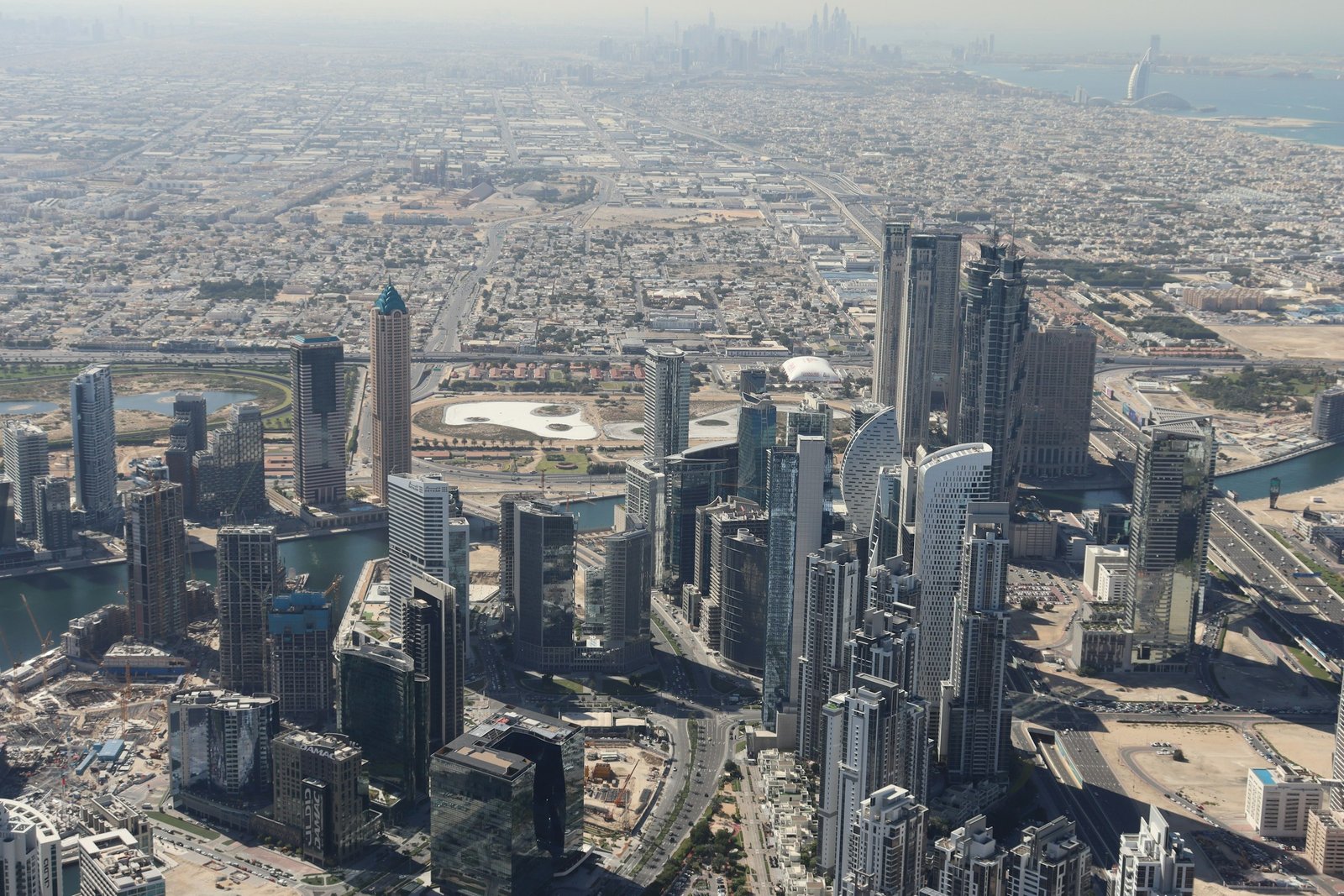
The mainland vs free zone company UAE choice depends mainly on where your customers are. Mainland companies trade directly onshore and can bid for government work; free zone companies gain sector ecosystems and possible 0% tax on qualifying income, but onshore access is restricted. With 100% foreign ownership now common to both, market access, tax and people decide.
Key pointThe free zone 0% rate applies only to qualifying income of a Qualifying Free Zone Person; for service businesses with growing onshore revenue, the de minimis limit often makes a combined free zone and mainland structure the better answer.
At a glance
Customers decide first
Mainland suits businesses selling to UAE consumers, businesses and government; free zones suit export, holding, regional management and international clients.
Ownership no longer decisive
Since 2021 most mainland activities allow 100% foreign ownership, so ownership rarely separates the routes except in strategic-impact sectors.
Tax depends on qualifying
Free zone companies get 0% only on qualifying income if all Qualifying Free Zone Person conditions are met; otherwise the standard 9% rate applies above AED 375,000.
Dubai bridges the gap
Eligible Dubai free zone companies can obtain a mainland operating permit for certain activities, with related income generally taxed at the standard rate.
Combined structures common
Many groups pair a free zone holding or export entity with a mainland subsidiary or branch for onshore sales and government contracts.
Swipe or scroll →
The mainland vs free zone company UAE decision turns on one question above all: where will your customers be? A mainland company licensed by an emirate's economic department can trade directly across that emirate's market and bid for government work. A free zone company enjoys a specialist regulatory ecosystem and, if it qualifies, a 0% corporate tax rate on qualifying income, but its direct access to onshore customers is restricted.
Since 2021 both routes generally allow 100% foreign ownership, so ownership is rarely the deciding factor any more. This guide sets out a practical framework built on five factors: market access, regulation, tax, people and cost. It reflects the position as of October 2026.
Mainland vs free zone company UAE: the short answer
Choose the mainland if you will sell mainly to UAE consumers or businesses, need a shopfront or local branches, want unrestricted access to government contracts, or plan a large onshore workforce. Choose a free zone if you will mainly export, hold investments, serve other free zone companies or international clients, or need a specific sector ecosystem such as commodities, media or logistics.
Many groups use both: a free zone entity for holding, regional management or export trading, and a mainland entity or branch for onshore sales. In Dubai, eligible free zone companies can now also obtain a permit for certain mainland activities, which narrows the gap for service businesses. The mainland vs free zone company UAE choice is therefore increasingly a question of structure, not a single binary.

The legal framework behind each route
Mainland companies are incorporated under the Commercial Companies Law, Federal Decree-Law No. 32 of 2021 and licensed by the economic department of the emirate where they operate, such as Dubai's Department of Economy and Tourism or Abu Dhabi's Department of Economic Development. The UAE government's mainland guide sets out the common sequence of trade name, initial approval, memorandum, premises and licence.
Free zones are created by federal and emirate-level legislation and run by their own authorities, each with its own companies regulations, licence categories, fees and leasing rules. There are dozens across the seven emirates. Federal laws on matters such as labour, immigration, criminal law, anti-money laundering and tax still apply inside free zones unless a specific exemption exists.
The DIFC and ADGM are a special category: financial free zones with their own common-law civil and commercial legislation, independent courts and financial regulators. They suit financial services, funds, holding companies and businesses that want common-law contracts, but they are not the typical choice for general trading. See our guides to setting up in the DIFC and ADGM.
The five factors compared
| Factor | Mainland company | Free zone company |
|---|---|---|
| Onshore market access | Can trade directly with customers in its emirate and supply across the UAE | Mainly inside the zone and abroad; onshore sales usually via distributors, branches or permits |
| Government contracts | Generally eligible, subject to tender rules and in-country value criteria | Historically limited; Dubai's mainland operating permit opens some access for eligible companies |
| Foreign ownership | 100% for most activities; strategic-impact sectors restricted | 100% as a rule |
| Corporate tax | Standard UAE corporate tax rules | 0% on qualifying income if Qualifying Free Zone Person conditions are met; otherwise standard rules |
| Regulator and rules | Emirate economic department plus federal law | Zone authority's regulations plus federal law; DIFC/ADGM have their own civil law |
| Premises | Ejari-registered lease (in Dubai) meeting municipal rules | Leasing within the zone; flexi-desk packages common |
| Visas | Linked to premises and MOHRE quotas | Issued via the zone authority, often linked to package or space |
| Customs | Standard GCC customs rules on imports | Goods can be held and re-exported with customs advantages in designated zones |
1. Market access
This is the decisive factor in most mainland vs free zone company UAE decisions. A free zone licence authorises activity within the zone and abroad. Selling into the onshore UAE is possible, but usually only through a mainland distributor or agent, a mainland branch, or, in Dubai, a mainland operating permit for eligible activities. If your business model depends on onshore customers, those workarounds add cost, contractual dependency and compliance work. Our guide to whether a free zone company can do business in the mainland explains each route.
2. Regulation and ecosystem
Free zones are often built around a sector: commodities, media, technology, logistics or healthcare. That brings tailored licence categories, sector networks and, sometimes, faster regulatory engagement. The mainland offers a wider activity list but may require federal or emirate sector approvals for regulated businesses.
3. Tax
Both mainland and free zone companies are within the UAE corporate tax regime and must register with the Federal Tax Authority. The standard rate is 9% on taxable income above AED 375,000. A free zone company can benefit from a 0% rate on qualifying income only if it meets the Qualifying Free Zone Person conditions, which include adequate substance in the zone, audited financial statements, arm's-length related-party pricing and keeping non-qualifying revenue within a de minimis limit of 5% of total revenue or AED 5 million, whichever is lower. Failing the conditions can mean losing the status for the current and following four tax periods.
Revenue from mainland customers is a common trap. Depending on the activity and the counterparty, it may be non-qualifying, and if a free zone company operates on the mainland through a branch or permit, that income is generally taxed at the standard rate. Read our analysis of Qualifying Free Zone Person status before assuming a free zone delivers a 0% outcome.
4. People and visas
Both routes can sponsor residence visas. Mainland quotas are linked to premises and labour registration with MOHRE, and mainland companies are subject to Emiratisation targets where they meet the relevant thresholds. Free zone visas are processed through the zone authority, often with allocations linked to the lease or package. Teams that will work at customer sites onshore need careful structuring whichever route you choose.
5. Cost and administration
Free zone packages can look cheaper at entry, especially with flexi-desk options, while mainland costs depend heavily on premises. Over three to five years, however, the comparison often shifts: workaround costs for onshore sales, audit requirements for Qualifying Free Zone Person status and dual-licensing fees can outweigh initial savings. Compare total cost of ownership over your business plan, not the first-year quote.
How the answer changes by emirate and zone
The UAE is not a single licensing market. Each emirate's economic department sets its own mainland procedures, and each free zone authority sets its own rules. The same business can face a different answer in Dubai, Abu Dhabi or the northern emirates.
Dubai
Dubai has the widest choice of free zones and, since 2025, a formal framework under Executive Council Resolution No. 11 of 2025 that allows eligible free zone companies to carry on certain activities on the Dubai mainland. The Free Zone Mainland Operating Permit launched in October 2025 is time-limited and renewable, applied for online, and initially covers non-regulated activities such as technology, consultancy, design, professional services and trading. It does not extend to other emirates.
Abu Dhabi
Abu Dhabi's mainland is licensed by the Department of Economic Development, and the emirate hosts ADGM alongside several industrial, logistics and media free zones. Abu Dhabi has its own arrangements for free zone companies seeking onshore licences, so the Dubai permit should not be assumed to have an Abu Dhabi equivalent on identical terms. Our comparison of Abu Dhabi free zones covers the options.
Sharjah and the northern emirates
Sharjah, Ajman, Umm Al Quwain, Ras Al Khaimah and Fujairah offer free zones that are often positioned on cost and speed, alongside mainland licensing through each emirate's own authority: the economic department in most of them, and Fujairah Municipality in Fujairah. These can work well for export trading and holding vehicles, but check where your staff will physically work: a licence in one emirate does not authorise a permanent establishment in another.
VAT and customs
VAT applies throughout the UAE, including most free zones. Certain zones are designated for VAT purposes, which changes how some supplies of goods within and between those zones are treated, but services are generally taxed in the ordinary way. On customs, goods held in a free zone can be stored, processed and re-exported with advantages, while goods released into the mainland are subject to customs duty in the usual way. For trading businesses, the customs and VAT flows can matter as much as corporate tax when you compare a mainland vs free zone company UAE structure.
A step-by-step decision process
- Map revenue by customer location. Estimate what share of revenue will come from onshore UAE customers, other free zone companies, government entities and overseas clients.
- Check activity eligibility. Confirm your activities are available in the shortlisted free zones and on the mainland list, and whether any require sector approval.
- Model the tax outcome. Test whether Qualifying Free Zone Person status is realistic given your revenue mix and substance, and compare with the mainland outcome.
- Plan people and premises. Estimate headcount, where staff will physically work and the premises needed for visa allocations.
- Assess onshore workarounds. If you prefer a free zone but need onshore sales, price the distributor, branch or permit route and its compliance burden.
- Consider a combined structure. Evaluate a free zone holding or regional entity with a mainland operating subsidiary or branch.
- Document the rationale. Record why you chose the structure; it helps with bank onboarding, tax substance and future investor diligence.
Illustrative scenario: a software business with mixed customers
This scenario is illustrative only; the parties are generic and no real matter is described.
A founder-led software company expects most early revenue from international clients, with a growing pipeline of UAE enterprise customers and a possible government tender in year two. The founders prefer a technology-focused free zone for its ecosystem and visa process.
The analysis shows the free zone works well for international revenue, but onshore enterprise contracts would put pressure on the de minimis limit and the tender would require mainland eligibility. The founders choose a free zone company now, with a plan to add a Dubai mainland operating permit or a mainland branch once onshore revenue becomes material, and they segregate accounting for onshore income from day one.
The lesson in this mainland vs free zone company UAE example: decide for the business you will have in two to three years, and build the bridge before you need it.
Risks and common mistakes
Choosing a free zone for the tax rate alone
The 0% rate applies only to qualifying income of a Qualifying Free Zone Person that meets all the conditions. Many service businesses with onshore customers will not qualify for all their income, and some will lose the status altogether.
Model the revenue mix and substance requirements first, and treat any tax benefit as a consequence of the right commercial structure, not the reason for it.
Selling onshore without a lawful route
Invoicing mainland customers directly from a free zone without the right licence, permit or distributor arrangement can breach licensing rules and trigger penalties, and may undermine tax status.
Choose a compliant route before you sign onshore contracts, and check how each route affects VAT and corporate tax.
Underestimating the cost of switching later
Converting a free zone company into a mainland company is not usually a simple transfer. It often means setting up a new entity, moving contracts, staff visas and bank accounts, and dealing with tax consequences.
If onshore growth is likely, build a structure that can add a mainland entity or branch without unwinding the original company.
Ignoring the DIFC and ADGM difference
Founders sometimes assume all free zones work alike. The DIFC and ADGM apply their own common-law regimes, courts and regulators, which affects contracts, employment, insolvency and data protection.
If you choose a financial free zone, take advice on its own legislation rather than relying on federal-law assumptions.
The cross-border angle
For groups from Bangladesh, India, the UK, Singapore or China, the right UAE vehicle also depends on the home-country tax position, treaty access and controlled-foreign-company rules. A free zone holding company may be attractive for regional investments, but substance in the UAE and tax residency evidence will be scrutinised both in the UAE and at home. Coordinate the UAE structure with home-country advisers, and see our pages on foreign direct investment in the UAE and free zone company formation.
What to do next
Before you apply anywhere, write down your expected revenue split, headcount plan and three-year growth path, then test each option against the five factors. Where the answer is mixed, consider a combined structure from the outset. For the mainland route, our step-by-step guide to setting up a company in Dubai mainland explains the licensing sequence; for the free zone route, see our guide to free zone company setup in the UAE.
In any mainland vs free zone company UAE analysis, the costliest errors come from structures that fit day one but not year three. A short structuring review before incorporation usually costs far less than re-domiciling, re-papering contracts and moving visas later.
TRW & Co helps founders, groups and family offices choose and implement the right structure, coordinating with registered tax agents on corporate tax modelling. To discuss your mainland vs free zone company UAE decision, contact our Dubai team at info@trw.co.
Frequently asked questions
01Is a free zone company better than a mainland company in the UAE?
Neither is better in the abstract. A free zone company suits export-led trading, holding structures, regional management and businesses that value a sector ecosystem. A mainland company suits businesses selling directly to UAE customers, needing shopfronts or branches, or bidding for government contracts. Start with where your revenue will come from over the next three years, then test tax, visas and cost. Many groups combine both.
02Can a free zone company sell to mainland customers?
Not freely. A free zone licence generally authorises activity inside the zone and abroad. To sell onshore, a free zone company usually appoints a mainland distributor or agent, opens a licensed mainland branch, or, in Dubai, obtains a mainland operating permit for eligible activities. Some cross-border supplies of services to mainland clients are possible, but each route has licensing, VAT and corporate tax consequences that should be checked first.
03Do free zone companies pay corporate tax?
Free zone companies are within the UAE corporate tax regime and must register. A company that meets all Qualifying Free Zone Person conditions pays 0% on qualifying income and 9% on other taxable income. Conditions include adequate substance, audited financial statements, arm's-length transfer pricing and keeping non-qualifying revenue below 5% of total revenue or AED 5 million, whichever is lower. Failing them removes the benefit for several tax periods.
04Can a mainland company be 100% foreign-owned?
Yes, for most activities. Since the 2021 reforms to the Commercial Companies Law, foreign investors can wholly own mainland companies carrying on most commercial and industrial activities. Activities of strategic impact, such as banking, insurance, defence and certain communications services, remain restricted. Professional activities may require a UAE local service agent who has no ownership. Check each activity against the relevant emirate's list.
05Can I convert a free zone company into a mainland company?
Direct conversion is not usually straightforward. In practice, businesses either set up a new mainland company and migrate contracts, staff and assets, or register a mainland branch of the free zone company where the zone and emirate allow it. Each option has consequences for visas, bank accounts, VAT and corporate tax, including the transfer of assets and any loss of Qualifying Free Zone Person status. Plan the transition before onshore revenue grows.
06Which is better for government contracts in the UAE?
Mainland companies have traditionally had clearer eligibility for federal and emirate government tenders, subject to procurement rules and in-country value criteria. Dubai's Free Zone Mainland Operating Permit is presented as opening some government contracting to eligible free zone companies, but scope depends on the activity and the procuring entity's requirements. If government work is central to your plan, confirm eligibility with the relevant procurement rules before choosing your structure.
Sources and official materials
- Steps to start a business on the mainland — UAE government guide to mainland licensing
- Doing business in free zones — UAE government overview of free zone business
- Federal Decree-Law No. 32 of 2021 on Commercial Companies — Onshore company law and legal forms
- Federal Tax Authority — Corporate tax registration and free zone guidance
- Dubai launches Free Zone Mainland Operating Permit — Dubai Media Office announcement of the permit framework
General information only, current as at 27 October 2026. It is not legal advice and does not create a lawyer–client relationship. UAE law differs between the onshore jurisdiction, the DIFC, ADGM and the free zones, and changes frequently; check current official sources and take advice on the facts of your matter.



