
TRW & Co · Corporate & Commercial
Construction Contracts in the UAE
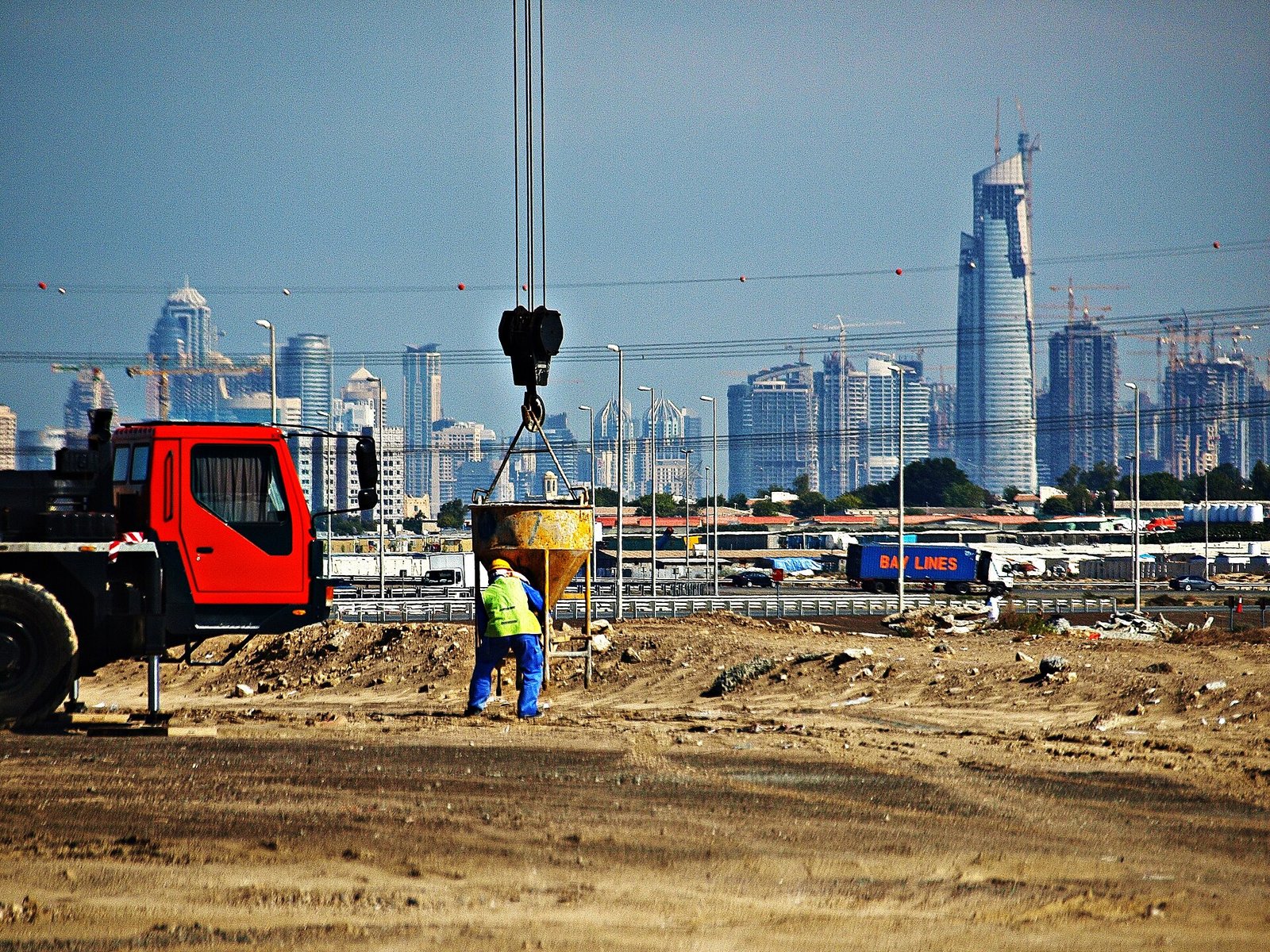
Construction contracts in the UAE decide who carries design, price, time and defect risk on a project. Since 1 June 2026 the new Civil Transactions Law has rewritten key muqawala rules, and Dubai has a new contractor licensing regime. This guide covers the framework, contract models, critical clauses, process and the mistakes that cost employers and contractors most.
Key pointUnder the new Civil Transactions Law, employers can end a contract of works for convenience against payment of costs, work done and lost profit, and hardship relief cannot be excluded, so FIDIC amendments drafted for the old code may not do what the parties expect.
At a glance
New civil code
Federal Decree-Law No. 25 of 2025 replaced the 1985 Civil Transactions Law on 1 June 2026 and revised the contract of works chapter.
Ten-year decennial liability
Contractor and designing engineer are jointly liable for ten years from delivery for collapse and structural defects; this cannot be excluded or limited by contract.
Termination for convenience
The employer may end the works before completion, paying expenses, work done and lost profit, which a court or tribunal may reduce where fair.
Dubai contractor licensing
Dubai Law No. 7 of 2025 took effect on 8 January 2026; contractors must register and be classified, with a one-year transition period.
Hardship cannot be excluded
Courts may extend time, adjust the price or end a contract after exceptional unforeseen events; contract clauses removing that power are void.
Swipe or scroll →
What construction contracts in the UAE cover
Construction contracts in the UAE are the agreements that allocate design, price, time, quality and risk on a building or infrastructure project: the main contract between employer and contractor, consultancy appointments for designers and supervising engineers, subcontracts, supply-and-install packages, and the bonds, guarantees and insurances that sit behind them. They are concluded at the start of a project, but they decide who pays when the ground conditions are worse than expected, when steel prices move or when the handover slips.
Onshore, the contract is a muqawala, the contract of works regulated by the federal civil code. That code changed on 1 June 2026, when the new Civil Transactions Law came into force. Several of the rules that matter most to employers and contractors are mandatory, which means the signed document is not the whole story: the law writes some terms in and strikes others out.
This page is about getting the contract right before and during the project. When a project has already gone wrong, our pages on construction disputes and construction arbitration take over. Large public and utility schemes are covered under infrastructure projects.
The legal framework in 2026
The new Civil Transactions Law
Federal Decree-Law No. 25 of 2025 promulgating the Civil Transactions Law was issued on 1 October 2025 and took effect on 1 June 2026, repealing Federal Law No. 5 of 1985. The government announcement highlights that courts may now adjust or terminate a contract of works where unforeseen circumstances disturb its balance, and that responsibilities and termination in contracts of works have been clarified. The law is generally not retrospective, so contracts signed before June 2026 still need the old code in view.
Commentary on the new muqawala chapter identifies five changes that every employer and contractor should know. Article 836 codifies the employer's right to end the contract and suspend the works at any time before completion, against payment of expenses, work done and lost profit, which a court or tribunal may reduce where equitable. Article 818 lets an employer, after notice and a reasonable remedy period, terminate or bring in another contractor at the defaulting contractor's cost without first obtaining a court order.
Article 816(3) adds a duty on the contractor to notify the employer immediately of factors that would hinder proper execution, with liability for the consequences of staying silent. Article 829 confirms that higher costs alone do not entitle a lump-sum contractor to more money, but the court may extend time, adjust the price or end the contract if exceptional, unforeseeable general circumstances upset the balance. The general hardship rule in Article 224 cannot be excluded by agreement.
Decennial liability
The contractor and the designing and supervising engineer or architect are jointly liable for ten years from delivery for total or partial collapse of buildings and fixed installations and for defects that threaten their stability and safety. Commentators describe the regime as largely carried over from the 1985 code; it is mandatory and cannot be excluded or limited by contract.
A claim must be brought within three years of the collapse or discovery of the defect. The new law now states expressly that the employer's statutory recourse does not extend to subcontractors, so the main contractor's protection against its subcontractors is contractual only. Our article on decennial liability explains the mechanics.
Licensing, classification and the free zones
Dubai Law No. 7 of 2025 Regulating Contracting Activities took effect on 8 January 2026. It requires contractors to be licensed, registered and classified, with a central register run by Dubai Municipality, and it applies in the free zones and the DIFC, with airport works exempt. Subcontracting needs approval, technical staff need competency certification, and employers must not engage unregistered contractors. Existing contractors have one year from commencement to regularise, extendable by the authorities, so the window closes around January 2027.
In Abu Dhabi, contractors and engineering consultancies are classified through the municipal system on the TAMM platform, as Abu Dhabi City Municipality has explained. Other emirates run their own licensing. In the DIFC, contracts are governed by the DIFC Contract Law if the parties choose it; in ADGM, English common law applies through the Application of English Law Regulations 2015. Bonds and guarantees are commercial instruments and draw on the Commercial Transactions Law, Federal Decree-Law No. 50 of 2022. Our guide to licensing a contracting or engineering company covers set-up.
Choosing the contract model and standard form
Most significant construction contracts in the UAE use a FIDIC form, usually the 1999 or 2017 Red Book for employer-designed works, the Yellow Book for design-build or the Silver Book for turnkey EPC. Government employers in several emirates issue their own amended conditions, and many private developers work from bespoke documents built on old FIDIC wording. The choice of model decides who carries design risk, how much control the employer keeps and how claims are priced.
| Model | Who designs | Price basis | Main UAE-specific point |
|---|---|---|---|
| Traditional (FIDIC Red Book or similar) | Employer's consultant | Re-measured or lump sum against a bill of quantities | Consultant and contractor share decennial liability for the building they design and build |
| Design and build (FIDIC Yellow Book) | Contractor, against employer's requirements | Lump sum with variations | Contractor takes design risk; check its consultant's licence and its professional indemnity cover |
| EPC or turnkey (FIDIC Silver Book) | Contractor | Fixed lump sum | Article 829 limits price relief, but hardship cannot be excluded; Dubai Law No. 7 of 2025 recognises turnkey projects |
| Construction management or multiple packages | Employer's team | Package by package | Interface risk sits with the employer; each package contractor needs its own classification |
| Early contractor involvement or two-stage | Shared, then contractor | Target cost or negotiated lump sum | The pre-contract services agreement must address exit, given the statutory duty to negotiate and end negotiations in good faith |
Amending a FIDIC form is normal practice for construction contracts in the UAE, but every amendment should be tested against the new mandatory rules. A clause that denies all relief for unforeseeable events, purports to limit decennial liability or lets the employer terminate without paying for work done will not survive in the form drafted. It is better to allocate the risk deliberately, for example by pricing a defined change-in-cost mechanism, than to rely on a clause a court may disregard.
Under the new code the contract you sign is not the whole contract: hardship relief, decennial liability and termination compensation are written in by law.
Clauses that decide value on UAE projects
Time, delay and liquidated damages
In construction contracts in the UAE, the parties may fix compensation in advance, but the court or tribunal can reduce an agreed amount that is excessive or where the obligation was partly performed, and can award more where the creditor proves fraud or gross negligence. Delay damages should therefore be a genuine pre-estimate, documented at the time, with a cap that both sides can defend. Employers should keep a record of how the daily rate was calculated.
Extension-of-time provisions need a workable notice regime. FIDIC's 28-day time bar is commonly used, and its effect in UAE proceedings depends on the wording, the governing law and the conduct of the parties. Contractors should treat time bars as binding; employers should not assume a missed notice ends every claim.
Payment, retention and security
Interim payment cycles, the certifier's timetable, retention percentages and release triggers, advance payment and performance guarantees, and parent company guarantees should be drafted together. Pay-when-paid clauses in subcontracts are common and their effect depends on drafting. Where the contract is silent on interest, the Commercial Transactions Law caps the rate on commercial debts at 9% and prohibits compounding. Guarantee wording should state whether the bank pays on demand or only on proof of default, because that choice drives any later injunction application.
Variations, ground risk and design development
Disputes under construction contracts in the UAE cluster around what counts as a variation. Define the employer's requirements precisely, set a fixed procedure for instructions and valuation, and decide who carries ground and utility risk. With the new duty to notify obstacles under Article 816(3), contractors should build an early-warning procedure into their project controls, and employers should require it in the contract.
Termination and suspension
Article 836 gives employers a statutory exit for convenience. If the parties want to exclude it or price it differently, they should say so expressly. Contractors should negotiate what happens to bonds, retention and parent guarantees on a convenience termination, because the article is silent on them. For contractor default, align the contractual termination procedure with the notice-and-cure route in Article 818.
Governing law, forum and language
Choose the dispute forum when the contract is signed: onshore courts, the DIFC Courts or ADGM Courts, or arbitration under the DIAC rules or another institution. Under the Federal Arbitration Law, the person signing must have authority to agree to arbitration. Onshore courts work in Arabic, so a bilingual contract should state which version prevails; our article on Arabic and English contracts explains the risk.
From tender to final account: the process
- Set the procurement route. Decide the delivery model, standard form and package strategy before tender, and check that each bidder holds the right licence and classification for the emirate and the value of the work.
- Issue tender documents. Include the conditions of contract with all amendments, the employer's requirements, the pricing document, draft bond and guarantee wording and the insurance schedule, so bids are priced on the real risk.
- Negotiate in good faith. The new law requires negotiations to be conducted and ended in good faith and imposes a non-excludable duty to disclose information decisive to consent. Record what was disclosed about site conditions and design status.
- Execute and secure. Confirm signatory authority, obtain the performance bond, advance payment guarantee and parent guarantee in agreed form, place contractor's all-risks and third-party cover, and register subcontractors where Dubai Law No. 7 of 2025 requires approval.
- Administer the contract. Run notices, programmes, variations and interim payments strictly to the contract. Keep contemporaneous records that would support or answer a delay or disruption claim.
- Complete and hand over. Take over the works with a snagging list, start the defects notification period and note the delivery date, which starts the ten-year decennial clock.
- Close the final account. Agree the final account and release retention and bonds against a settlement that addresses known claims expressly, including any reserved decennial rights.
Documents and evidence to assemble
Before signing, an employer or contractor should be able to put its hands on:
- Trade licence, contractor or consultant classification and, in Dubai, registration status under the 2025 contracting law.
- Authority documents for each signatory, including a power of attorney that expressly covers agreeing to arbitration.
- The full contract set: agreement, conditions with particular conditions, employer's requirements, drawings, specifications, bill of quantities or pricing schedule and programme.
- Bond, guarantee and parent company guarantee wording, with the issuing bank's confirmation.
- Insurance certificates for contractor's all-risks, third-party liability, professional indemnity and, where offered, latent defects cover.
- Site investigation reports and the disclosure log showing what was provided at tender.
- Subcontract and supply agreements with back-to-back notice periods, warranties and decennial-style indemnities.
- Any pre-June 2026 contract documents, so the applicable code can be identified for each instrument.
If a project was signed under the 1985 code but variations, novations or new subcontracts are signed after 1 June 2026, different instruments on the same project may be governed by different versions of the civil code. Map them now, before a claim forces the question.
Risks and common mistakes in construction contracts in the UAE
Treating FIDIC time bars and caps as automatic
International teams often assume that a notice time bar, an aggregate liability cap or an exclusion of consequential loss will operate as it would under English law. Onshore, those clauses are read alongside mandatory rules on agreed compensation, abuse of rights and the non-excludable hardship and decennial regimes. They often still help, but they need careful drafting, a coherent risk allocation and evidence that the cap was negotiated. Assume that a court or tribunal will look at the economic result, not only the words, and draft accordingly.
Engaging an unregistered or wrongly classified contractor
Since 8 January 2026, Dubai Law No. 7 of 2025 has prohibited employers from engaging contractors that are not registered and classified, and contractors from working outside their classification. Penalties range from fines to suspension and cancellation of registration. Existing contractors have a transitional year to regularise. Employers should add classification warranties, evidence requirements and termination rights to new contracts, and contractors should check that every subcontractor and consortium member has the right approvals.
Relying on back-to-back subcontracts for decennial risk
The new law expressly excludes statutory decennial recourse against subcontractors. A main contractor that remains liable to the employer for ten years needs a contractual route against specialist subcontractors for structural packages: extended warranties, indemnities, parent guarantees and insurance that survive for the decennial period plus the three-year claim window. Consultants should mirror this with their sub-consultants.
Ignoring the convenience termination right
Employers may now release themselves from the contract before completion against payment of expenses, completed work and lost profit, subject to the tribunal's power to reduce lost profit. Contractors that do not address this right may find a project ended with their bonds still in the employer's hands. Agree the effect on security, demobilisation costs and subcontract termination costs, or exclude the right expressly if the commercial deal requires it.
Underestimating the notice duty
Article 816(3) requires the contractor to notify immediately any factor that will hinder proper execution, and makes it liable for the consequences of failing to do so. The article does not prescribe the form of notice. Contractors should adopt a standing early-warning procedure with nominated recipients and a template, and employers should tie the duty to their own programme and risk registers so warnings lead to decisions rather than claims files.
Using a governing law that does not fit the forum
Choosing English law with onshore courts, or UAE law with a DIFC seat, can work, but each combination has consequences for proof of foreign law, mandatory rules and enforcement. For land-based projects onshore, mandatory UAE rules such as decennial liability will apply in any event. Decide forum and law together, and read our article on governing law and jurisdiction clauses.
The cross-border angle
Contractors from India, China, Bangladesh, the United Kingdom and South Korea are active across UAE projects, and many employers are funded from Saudi Arabia, the wider GCC or Asia. That brings foreign-law guarantees, parent companies abroad and supply chains that cross several jurisdictions. A UAE-law contract with an English-law parent guarantee, or a Chinese-law supply agreement, needs aligned dispute clauses so that one tribunal can hear connected claims.
Enforcement shapes the choice. Arbitral awards from a New York Convention seat are generally the most portable option for foreign counterparties, while court judgments depend on treaties and reciprocity. For contractors from Bangladesh and India deploying labour and plant, employment, visa and customs compliance sit alongside the construction contracts in the UAE themselves, so we coordinate with colleagues on cross-border contracting and immigration matters.
Where a project spans the Kingdom of Saudi Arabia and the UAE, remember that the Saudi Civil Transactions Law took a different path and that FIDIC forms amended for one market may not work in the other. TRW & Co works with colleagues in Dhaka, Singapore and London when a foreign parent, financier or supplier is involved.
How TRW & Co helps
Contract strategy and drafting
We advise on delivery models and draft or amend FIDIC and bespoke main contracts, consultancy appointments and subcontracts, testing each amendment against the new Civil Transactions Law and the forum chosen.
Tender and negotiation support
We review tender packages, prepare clarifications and qualifications and run negotiations, keeping a record of disclosure and good-faith conduct that will matter if the deal later fails.
Security and insurance review
We draft and review bonds, guarantees, parent company guarantees and step-in rights, and check that insurances and decennial protections line up across the contract chain.
Regulatory compliance
We map licensing and classification obligations under Dubai Law No. 7 of 2025 and in other emirates, and build warranties and evidence requirements into contracts.
Contract administration support
We help project teams with notices, variation instructions, extension-of-time submissions and convenience termination, so that positions are protected before they become disputes.
Escalation and coordination
When a dispute crystallises, we move the file to our disputes team and, where court representation is required, work alongside locally licensed advocates and registered practitioners.
Contact us through our contact page, email info@trw.co or call +971 58 942 1012. You can also browse all our practices, including project finance and real estate development.
Checklist for decision-makers
- Identify whether each contract on the project was signed before or after 1 June 2026, and which civil code governs it.
- Confirm that every contractor, subcontractor and consultant holds the licence and classification needed, especially in Dubai before the transitional deadline.
- Test each amendment to the standard form against hardship, decennial liability, agreed compensation and convenience termination rules.
- Decide forum and governing law together, and check signatory authority for arbitration.
- Make liquidated damages a documented, defensible pre-estimate.
- Set out how bonds, retention and guarantees are treated on every type of termination.
- Flow down decennial-style warranties and indemnities to structural subcontractors and sub-consultants.
- Build an early-warning procedure to meet the contractor's new notice duty.
- Keep a disclosure log from tender to signature.
- Review standard construction contracts in the UAE used by your business at least once a year against new legislation.
Frequently asked questions
01Does the new Civil Transactions Law apply to a contract signed in 2025?
Generally no. The new law took effect on 1 June 2026 and is not generally retrospective, so a construction contract concluded before that date is still interpreted under the 1985 code for most purposes. There are transitional rules, for example on limitation periods, and later instruments such as variations, novations and new subcontracts may fall under the new law. On long projects it is worth mapping which documents were signed when, because two codes can apply on the same site. Take advice before relying on a provision that changed.
02Can we exclude decennial liability in the contract?
No. The ten-year liability of the contractor and the designing and supervising engineer for collapse and defects threatening the stability or safety of buildings and fixed installations is mandatory, and commentary on the new law confirms that it cannot be excluded or limited by agreement. What you can do is manage it: insure it where latent defects cover is available, obtain extended warranties and indemnities from specialist subcontractors (who are now expressly outside the statutory regime), and keep handover records that fix the delivery date from which the ten years run.
03Is a FIDIC contract enforceable in the UAE?
Yes. FIDIC forms are widely used and are enforceable as a matter of contract, subject to mandatory UAE law where UAE law governs or the project is onshore. The usual issues are not enforceability as such but how particular clauses operate: time bars, liability caps, liquidated damages, termination and hardship. Several government employers issue their own amended conditions. Amendments should be checked against the 2026 civil code, and the dispute clause should be updated to reflect the current arbitral institutions, since references to defunct centres still appear in old templates.
04Can an employer terminate a construction contract for convenience?
Under the new code, yes. The employer may release itself from the contract and suspend the works at any time before completion, but must compensate the contractor for expenses, work done and the profit it would have made. A court or tribunal may reduce the lost profit where equitable, for example to reflect savings or redeployment. Parties who want a different result should say so expressly. Contractors should negotiate what happens to bonds, retention and parent guarantees on a convenience termination, because the statute does not address them.
05Do contractors in Dubai free zones need to register under Dubai Law No. 7 of 2025?
According to published commentary on the law, it applies to contracting activities across Dubai, including the free zones and the DIFC, with an exemption for airport-related works and the possibility of further exemptions. The law took effect on 8 January 2026 and gives existing contractors a year to regularise, which the authorities may extend. Employers are prohibited from engaging unregistered contractors. If you build or commission works in a Dubai free zone, check registration and classification status now rather than at the next permit application.
06Are liquidated damages for delay enforceable?
Parties may agree compensation in advance, and UAE courts and tribunals generally give effect to delay damages clauses. However, the court can reduce an agreed amount that is excessive or where the obligation was partly performed, and can award more if the creditor proves fraud or gross negligence; agreements removing that control are void. An employer should keep evidence of how the daily rate was set, and a contractor should check that the cap and the relationship with general damages are clear.
07How is a construction contract different from a construction dispute matter?
A construction contract matter is preventive: choosing the model, drafting and negotiating terms, securing bonds and insurance, and administering notices and variations so that rights are preserved. A dispute matter begins when a claim crystallises and focuses on evidence, quantum, forum and enforcement. The two connect, because most disputes turn on how the contract was written and administered. Our separate pages on construction disputes and construction arbitration cover the contentious stage.
Sources and official materials
- Federal Decree-Law No. 25 of 2025 promulgating the Civil Transactions Law — Official text and status of the new civil code, in force 1 June 2026
- UAE Government issues Federal Decree-Law promulgating the Civil Transactions Law — Official summary including contracts of works and hardship
- Dubai Municipality — Authority for contractor registration and classification in Dubai
- Abu Dhabi City Municipality: classification of engineering establishments — Contractor and consultancy classification through TAMM
- Dubai International Arbitration Centre — DIAC rules and model clauses
- DIFC Courts — Common law court for DIFC-based or opted-in contracts
- UAE Legislation portal — Federal laws including the Commercial Transactions and Arbitration Laws
General information only, current as at 27 October 2026. It is not legal advice and does not create a lawyer–client relationship. UAE law differs between the onshore jurisdiction, the DIFC, ADGM and the free zones, and changes frequently; check current official sources and take advice on the facts of your matter.



